In our last post we looked at some very early developments in nanotechnology, including the possible impact that Richard Feynman's 1959 lecture "There's Plenty of Room at the Bottom" may have had on later advances in the field. It was certainly an influence on Eric Drexler, "the undisputed godfather of nanotechnology", who encountered Feynman's talk in 1979.
The 1980s saw the real emergence of nanotechnology as a field of study. The publication of Drexler's seminal book Engines of Creation: The Coming Era of Nanotechnology in 1986 marked an important milestone for the field. In the book, Drexler (unknowingly) appropriated and popularised the term "nanotechnology" itself, which had been initially defined in a slightly different context in 1974 by Tokyo Science University Professor Norio Taniguchi as "the processing of, separation, consolidation, and deformation of materials by one atom or by one molecule". In Engines of Creation, Drexler presented his idea of molecular manufacturing and the "molecular assembler": a "proposed device able to guide chemical reactions by positioning reactive molecules with atomic precision". Drexler's 1992 book Nanosystems: Molecular Machinery, Manufacturing, and Computation, published after completion of his PhD at MIT (he earned the first doctoral degree on the topic of molecular nanotechnology) continued to build on these ideas.
The 1980s also saw other important advances, including the invention of the scanning tunnelling microscope (STM) in 1981 and the discovery of fullerenes in 1985. The Scanning Tunnelling Microscope, developed by Gerd Binnig and Heinrich Roher at IBM Zurich Research Laboratory, allowed surfaces to be examined at the atomic level. In 1985, Harry Kroto, Richard Smalley and Robert Curl discovered fullerenes, sometimes called buckyballs - hollow molecules composed of carbon, which helped lead to the structural assignment of carbon nanotubes. These developments meant that "nanotechnology could develop through the scientific method rather than the conceptual and thus untestable visions of Drexler", and the field as we know it today - diverse and full of possibility - was born.
Next week we'll look at some of the debates and developments that have occurred in more recent years, and get a glimpse of where nanotechnology might be headed in the future.
You can find out more about our nano-coating technology here: www.p2i.com/technology
Showing posts with label nano technology. Show all posts
Showing posts with label nano technology. Show all posts
Exhibiting at CTIA Wireless 2012
on Friday, May 11, 2012
This week we have been exhibiting for the first time at CTIA Wireless in New Orleans. The show is a leading electronics event and we were there showcasing our Aridion technology to a host of brands, businesses and media.
You can see some images of our booth further below but one of the highlights from the event was the video that Phone Arena took of our demonstration which you can watch by clicking the below screen:
You can read the article in full here. If you would like to know more about Aridion and how it works do ask in the comments below otherwise you can visit www.aridion.com


You can see some images of our booth further below but one of the highlights from the event was the video that Phone Arena took of our demonstration which you can watch by clicking the below screen:
You can read the article in full here. If you would like to know more about Aridion and how it works do ask in the comments below otherwise you can visit www.aridion.com


Kangol introduces P2i headwear collection
on Wednesday, May 2, 2012
You may have seen on our Facebook and Twitter accounts about our collaboration with Kangol on their new range of headwear featuring our ion-mask™ technology. Well, we are delighted to announce that the collection is now available!

.jpg)
As you can see from the video, headwear that is treated with ion-mask™ will stay dry and lightweight keeping the wearer comfortable throughout the day.
The complete collection can be viewed here: http://www.kangol.com/category/shop/p2i/ and below is an example of how the ion-mask™ technology repels water:
We are excited to be working with Kangol and look forward to hearing your thoughts on how you find these hats? If you have any questions about ion-mask™, such as how it works, please do comment below or you can get in contact with us on our Facebook and Twitter pages.

.jpg)
To tie in with the launch both Kangol and P2i have released a video which showcases the benefits ion-mask™ brings to headwear which you can see below:As you can see from the video, headwear that is treated with ion-mask™ will stay dry and lightweight keeping the wearer comfortable throughout the day.
The complete collection can be viewed here: http://www.kangol.com/category/shop/p2i/ and below is an example of how the ion-mask™ technology repels water:
 |
| Polo Stripe featuring ion-mask™ |
Labels:
caps,
dry,
hats,
headwear,
ion mask,
ion-mask,
kangol,
lightweight,
liquid repellent,
nano coating,
nano technology,
P2i,
water,
water repellent
0
comments

Scott Steinberg highlights Aridion as technology to look out for in 2012
on Wednesday, April 11, 2012
Scott Steinberg, technology analyst for broadcast networks including CNN, FOX, NBC and publications such as The New York Times and Wired has spoken with NewsWatch TV about some of the top technology products to look out for in 2012. And Aridion technology is one of them!
The show which was hosted by Scott, was broadcast across America on the 5th April and highlighted what technology products are worth keeping your eye out for this year. The show which is 30 minutes in length showcased our Aridion technology towards the end of the episode and you can watch our segment below:
If you would like to know more about Aridion and how it protects electronics from water and corrosion damage you can here.

The show which was hosted by Scott, was broadcast across America on the 5th April and highlighted what technology products are worth keeping your eye out for this year. The show which is 30 minutes in length showcased our Aridion technology towards the end of the episode and you can watch our segment below:
If you would like to know more about Aridion and how it protects electronics from water and corrosion damage you can here.

We did it again!
on Wednesday, April 4, 2012
So we have returned from AudiologyNOW! 2012 and not only was it a great show but we are delighted to have won the Best of Show award for the second year running! What makes it even more exciting is that this is the first times in AudiologyNOW's history that a company has won the award twice.
Winning the award topped off what was another great show for us, where we increased awareness of Aridion™ as well as introducing the technology to new businesses and people.
We have put up a collection of images from the show which you can see on our Flickr site as well as watching a montage of what we got up to below:
 |
| P2i's CEO, Carl Francis and Natalia Delclaux accepting the award from AudiologyNOW! |
 |
| The 2012 Best of Show award |
We have put up a collection of images from the show which you can see on our Flickr site as well as watching a montage of what we got up to below:
Returning to AudiologyNOW!
on Wednesday, March 28, 2012
About this time last year our booth was crowned the Best of Show at AudiologyNOW! 2011 and we are back exhibiting at this year's show which takes place in Boston from the 29th-31st March 2012.
Our fingers are crossed, hoping to win the Best of Show award again but our real aim at AudiologyNOW! 2012 is to promote and demonstrate our Aridion™ technology. Since the 2011 show, Aridion™ is now applied to approximately 60% of hearing aids worldwide, protecting them against water and corrosion damage which can occur where moisture, sweat and cerumen builds up.
These types of environments can all be found within and around the ear and are a significant factor in causing hearing aids to malfuction. Aridion™ signfincantly reduces the damage caused by liquid and moisture resulting in longer lasting devices and reduced return rates.
AudiologyNOW! is the world's largest gathering of audiologists and we are looking forward to once again showcasing how Aridion™ can revolutionize the performance of hearing aids for manufacturers and consumers.
Below are some images from last years show:
We will be tweeting from the show and you can follow us on Twitter here.
Our fingers are crossed, hoping to win the Best of Show award again but our real aim at AudiologyNOW! 2012 is to promote and demonstrate our Aridion™ technology. Since the 2011 show, Aridion™ is now applied to approximately 60% of hearing aids worldwide, protecting them against water and corrosion damage which can occur where moisture, sweat and cerumen builds up.
These types of environments can all be found within and around the ear and are a significant factor in causing hearing aids to malfuction. Aridion™ signfincantly reduces the damage caused by liquid and moisture resulting in longer lasting devices and reduced return rates.
AudiologyNOW! is the world's largest gathering of audiologists and we are looking forward to once again showcasing how Aridion™ can revolutionize the performance of hearing aids for manufacturers and consumers.
Below are some images from last years show:
 |
| CEO, Carl Francis and Natasha Verniquet with the Best of Show Award |
 |
| Capture of the P2i booth from the foyer |
Waterproof and water repellent electronics...
on Wednesday, March 21, 2012
On the back of the International CES and Mobile World Congress (MWC) tradeshows there has been an increased amount of discussion, and at times confusion on the difference between waterproof and water repellent electronics. In this post, we will shed more light and understanding on the subject, but before we begin, here is how each is defined:
How do electronics become waterproof?
The term waterproof is itself confusing as there are varying scales of 'waterproofness' that can be measured to determine how well electronics perform in and around water. This scale is known as the Ingress Protection Rating (IPX) and is based on a scale of 0-8 where 0 means it has no protection and 8 means it can handle continuous immersion in water. For example, an electronic device that has an IPX7 rating is protected against water submersion to a depth of 1m for no longer than 30mins. The level of water protection a device is capable of is usually highlighted by the manufacturer either on the device or in the manual.
For a smartphone to pass IPX6 and above, the devices physical appearance is normally compromized and this can be seen through the development of ruggedized handsets that feature protective rubber and plastic casings, as below:
Fast forward to today and what was clear from the coverage at CES and MWC is that there is a strong desire for devices to be able to withstand water or other liquids. But unlike the above, the devices that are now appearing and claiming to be waterproof are not basic phones but instead are the latest smartphones on the market. What's more, these devices do not appear to have a protective case at all.
How are these new devices waterproof?
Well the answer is quite simple, gaskets and O-rings. Before water can reach the valuable internal components where all our data is stored there are barriers in place in the forms of gaskets and O-rings. For quick reference a gasket is a mechanical seal which fills the space between two or more surfaces to prevent leaking while an O-ring is designed to be compressed between two parts creating a seal. While both these barriers stop water from penetrating inside the device they can still alter physical aspects of the device making them bulky as well as expensive to produce and purchase.
There is also another problem, these seals can be comprised by general use and over time the parts can move or be damaged should the device be dropped. If just one of these barriers were to break, water would then be able seep inside towards the circuit board and internal components, resulting in device failure and loss of data as the inside becomes exposed to water.
Why repellency over waterproof?
Firstly, we need to be clear what repellent means when talking about electronics and how it differs from waterproof. That is where Aridion™ comes in.
The key difference is that electronics treated with Aridion™ will still allow water to get inside. Does that mean the end of the devices life? Not necessarily, as Aridion™ molecularly bonds to both the inside and outside of the entire device ensuring that each and every exposed surface is coated. This means that any water that does come into contact will move away from the surface rather than sticking to the device and if water does get inside, the internal components are also treated, producing the same effect.
This type of protection allows the device to be created without having to compensate for a protective casing, gaskets or O-rings. What is important to remember however is that even though the water is repelled, the coating does not make the device waterproof as it is not designed to withstand submersion.
You can get a better idea of how the coating is applied and works in this video:
Aridion™ provides water protection by removing the buildup of corrosion. Corrosion occurs not just when a phone is submerged but in high humidity and moisture environments such as saunas, in the bathroom when having a shower or traveling through different temperatures. All these factors can lead to internal moisture buildup which over time can corrode the circuits. Aridion™ protects against this as it stops the water/moisture from sticking to and in between the components which would result in electrochemical migration. Electrochemical migration is the movement of metal ions between conductors and if this happens the device short circuits.
So what is the difference?
In the simplest terms, for a device to be waterproof it has to either be completely sealed and ruggedized (making them bulky) or alternatively it must have barriers in place which stops water from penetrating through. The disadvantage with that being these seals can break resulting in the device becoming susceptible to water and corrosion damage.
Water repellent does not mean waterproof but it does mean protection from splashes, spills, corrosion and water damage brought on by the scenarios mentioned earlier (humidty and moisture) as well as those 'caught out in the rain' moments we have all experianced.
If you would like to know more about Aridion™ technology and the benefits it offers you can here.
The following video which was filmed at MWC with our CTO Dr. Stephen Coulson visibly demonstrates the benefits that Aridion™ offers to electronics devices:
Aridion™ is applied during the manufacturing process and is already applied to over 9 million devices including the Motorola RAZR and XOOM 2.
- Waterproof: Impervious to water
- Water Repellent: Treated with a finish that is resistant but not impervious to penetration by water
How do electronics become waterproof?
The term waterproof is itself confusing as there are varying scales of 'waterproofness' that can be measured to determine how well electronics perform in and around water. This scale is known as the Ingress Protection Rating (IPX) and is based on a scale of 0-8 where 0 means it has no protection and 8 means it can handle continuous immersion in water. For example, an electronic device that has an IPX7 rating is protected against water submersion to a depth of 1m for no longer than 30mins. The level of water protection a device is capable of is usually highlighted by the manufacturer either on the device or in the manual.
For a smartphone to pass IPX6 and above, the devices physical appearance is normally compromized and this can be seen through the development of ruggedized handsets that feature protective rubber and plastic casings, as below:
 |
| Sonim XP3 waterproof phone |
How are these new devices waterproof?
Well the answer is quite simple, gaskets and O-rings. Before water can reach the valuable internal components where all our data is stored there are barriers in place in the forms of gaskets and O-rings. For quick reference a gasket is a mechanical seal which fills the space between two or more surfaces to prevent leaking while an O-ring is designed to be compressed between two parts creating a seal. While both these barriers stop water from penetrating inside the device they can still alter physical aspects of the device making them bulky as well as expensive to produce and purchase.
There is also another problem, these seals can be comprised by general use and over time the parts can move or be damaged should the device be dropped. If just one of these barriers were to break, water would then be able seep inside towards the circuit board and internal components, resulting in device failure and loss of data as the inside becomes exposed to water.
Why repellency over waterproof?
Firstly, we need to be clear what repellent means when talking about electronics and how it differs from waterproof. That is where Aridion™ comes in.
The key difference is that electronics treated with Aridion™ will still allow water to get inside. Does that mean the end of the devices life? Not necessarily, as Aridion™ molecularly bonds to both the inside and outside of the entire device ensuring that each and every exposed surface is coated. This means that any water that does come into contact will move away from the surface rather than sticking to the device and if water does get inside, the internal components are also treated, producing the same effect.
This type of protection allows the device to be created without having to compensate for a protective casing, gaskets or O-rings. What is important to remember however is that even though the water is repelled, the coating does not make the device waterproof as it is not designed to withstand submersion.
You can get a better idea of how the coating is applied and works in this video:
Aridion™ provides water protection by removing the buildup of corrosion. Corrosion occurs not just when a phone is submerged but in high humidity and moisture environments such as saunas, in the bathroom when having a shower or traveling through different temperatures. All these factors can lead to internal moisture buildup which over time can corrode the circuits. Aridion™ protects against this as it stops the water/moisture from sticking to and in between the components which would result in electrochemical migration. Electrochemical migration is the movement of metal ions between conductors and if this happens the device short circuits.
So what is the difference?
In the simplest terms, for a device to be waterproof it has to either be completely sealed and ruggedized (making them bulky) or alternatively it must have barriers in place which stops water from penetrating through. The disadvantage with that being these seals can break resulting in the device becoming susceptible to water and corrosion damage.
Water repellent does not mean waterproof but it does mean protection from splashes, spills, corrosion and water damage brought on by the scenarios mentioned earlier (humidty and moisture) as well as those 'caught out in the rain' moments we have all experianced.
If you would like to know more about Aridion™ technology and the benefits it offers you can here.
The following video which was filmed at MWC with our CTO Dr. Stephen Coulson visibly demonstrates the benefits that Aridion™ offers to electronics devices:
Aridion™ is applied during the manufacturing process and is already applied to over 9 million devices including the Motorola RAZR and XOOM 2.
Returning from Mobile World Congress 2012
on Monday, March 5, 2012
Having attended Mobile World Congress (MWC) for the first time last year we returned to Barcelona bigger and better.
With such a great show in 2011 we hoped that this year would bring similar results and we were not wrong, in fact the the buzz and coverage we recieved surpassed all our expectations.
Before MWC officially kicked off we attended ShowStoppers, a media only event that allowed us to demonstrate our Aridion™ technology to media and journalists from around the world as well as answering any questions they had. Over the course of the day we were interviewed by leading technology sites including Mashable and BBC Technology.
MWC which ran from the 27th February to the 1st March, the pattern continued as we carried out almost hourly interviews and demonstrations and you can see a collection of these interviews and videos by liking our Facebook page and clicking the links. We were also the topic of conversation for many podcast sites and you can listen to The Fonecast interview with our CTO, Dr. Stephen Coulson here and clicking on the Electronics tab.
In addition to this, MWC was also the venue to announce the winner of the Smart UK Project award. The Project was set up to find Britain's most innovative mobile company and despite not winning the award we were delighted to be a finalist from 79 initial company entries. You can watch the summary of the Smart UK Project awards here.
The show was a great success and you can see some of the images from our booth below:
If you have any questions about our Aridion technology and how it protects your electronics from water damage, you can email us at info@p2i.com.
Next up for us is AudiologyNOW! in Boston.
 |
| Our booth at MWC 2012 |
Before MWC officially kicked off we attended ShowStoppers, a media only event that allowed us to demonstrate our Aridion™ technology to media and journalists from around the world as well as answering any questions they had. Over the course of the day we were interviewed by leading technology sites including Mashable and BBC Technology.
MWC which ran from the 27th February to the 1st March, the pattern continued as we carried out almost hourly interviews and demonstrations and you can see a collection of these interviews and videos by liking our Facebook page and clicking the links. We were also the topic of conversation for many podcast sites and you can listen to The Fonecast interview with our CTO, Dr. Stephen Coulson here and clicking on the Electronics tab.
In addition to this, MWC was also the venue to announce the winner of the Smart UK Project award. The Project was set up to find Britain's most innovative mobile company and despite not winning the award we were delighted to be a finalist from 79 initial company entries. You can watch the summary of the Smart UK Project awards here.
The show was a great success and you can see some of the images from our booth below:
 |
| Hannibal our magician performs to the crowd |
 |
| The team |
Next up for us is AudiologyNOW! in Boston.
ion-mask™ heads to ISPO
on Thursday, January 26, 2012
After a very successful International CES our focus now turns to showcasing our ion-mask™ technology at the 2012 ISPO tradeshow in Munich, Germany.
ISPO which takes place from the 29th January - 1st February is considered the leading international sports business network with around 2,000 exhibitors and over 60,000 delegates from more than 100 countries.

Last July we attended a similar show; the EU OutDoor show in Friedrichshafen where we demonstrated the game changing benefits that ion-mask™ can offer to footwear, textiles and accessories and you can see how we got on in the video below:
ISPO which takes place from the 29th January - 1st February is considered the leading international sports business network with around 2,000 exhibitors and over 60,000 delegates from more than 100 countries.

Last July we attended a similar show; the EU OutDoor show in Friedrichshafen where we demonstrated the game changing benefits that ion-mask™ can offer to footwear, textiles and accessories and you can see how we got on in the video below:
Come and see the technology for yourself!
At ISPO 2012 we will be located in Hall B6, Booth 122 where we will again be highlighting our world leading ion-mask™ technology via videos and hands-on demonstrations of treated and untreated footwear, tissues and fabrics.
ion-mask™ has already been adopted by leading lifestyle brands including: Timberland, KSwiss, Hi-Tec, adidas, Van Dal, Scott, Teva, Fox gloves and Bollman Hats to name a few. Attending ISPO is an opportunity to further expand the range of products that ion-mask™ protects. You can see a collection of videos featuring ion-mask™ here.
Throughout the show we will be uploading images and posting comments live from the booth so do 'Like' us on Facebook and follow us on Twitter to be kept up to date.
See you there!
CES validates P2i as liquid repellent world leader
on Friday, January 20, 2012
In January last year we attended International CES in Las Vegas where we showcased Aridion™, our liquid repellent technology for consumer electronic devices and you can read how we got on here.
For 2012 we went back to CES with an even bigger booth and a major electronic manufacturer incorporating Aridion™ into their production process.
International CES, which took place from the 10th-13th January is the world's largest tradeshow for consumer electronics as well as a showcase for the latest technologies. The 2012 event was the largest in it's 44 year history with over 153,000 attendees and more than 3,100 exhibitors gathering to see the latest technological developments.
Throughout the four days our booth maintained a continous flow of delegates keen to see a demonstration of Aridion™ technology as well as discovering how it can protect electronic devices from liquid damage and corrosion. What was also great is that many delegates who visited us last year came back to our booth, this time bringing a crowd with them interested to see the technology first hand.


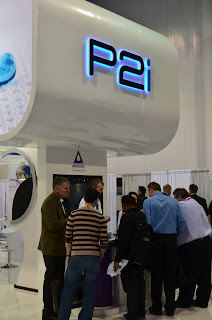
The combination of media coverage, a consistantly busy booth and Hannibal, our corporate magician entertaining the crowds, once again made CES a great success for us and validated our position as the world leaders in liquid repellent nano-coating technology for consumer electronics. We are now in further discussions with leading electronic brands about applying Aridion™ to a new range of consumer devices so watch this space.
You can see a collection of our images here as well as watching a short video we have put together showing some of the highlights from our booth:
P2i
For 2012 we went back to CES with an even bigger booth and a major electronic manufacturer incorporating Aridion™ into their production process.
International CES, which took place from the 10th-13th January is the world's largest tradeshow for consumer electronics as well as a showcase for the latest technologies. The 2012 event was the largest in it's 44 year history with over 153,000 attendees and more than 3,100 exhibitors gathering to see the latest technological developments.
Throughout the four days our booth maintained a continous flow of delegates keen to see a demonstration of Aridion™ technology as well as discovering how it can protect electronic devices from liquid damage and corrosion. What was also great is that many delegates who visited us last year came back to our booth, this time bringing a crowd with them interested to see the technology first hand.

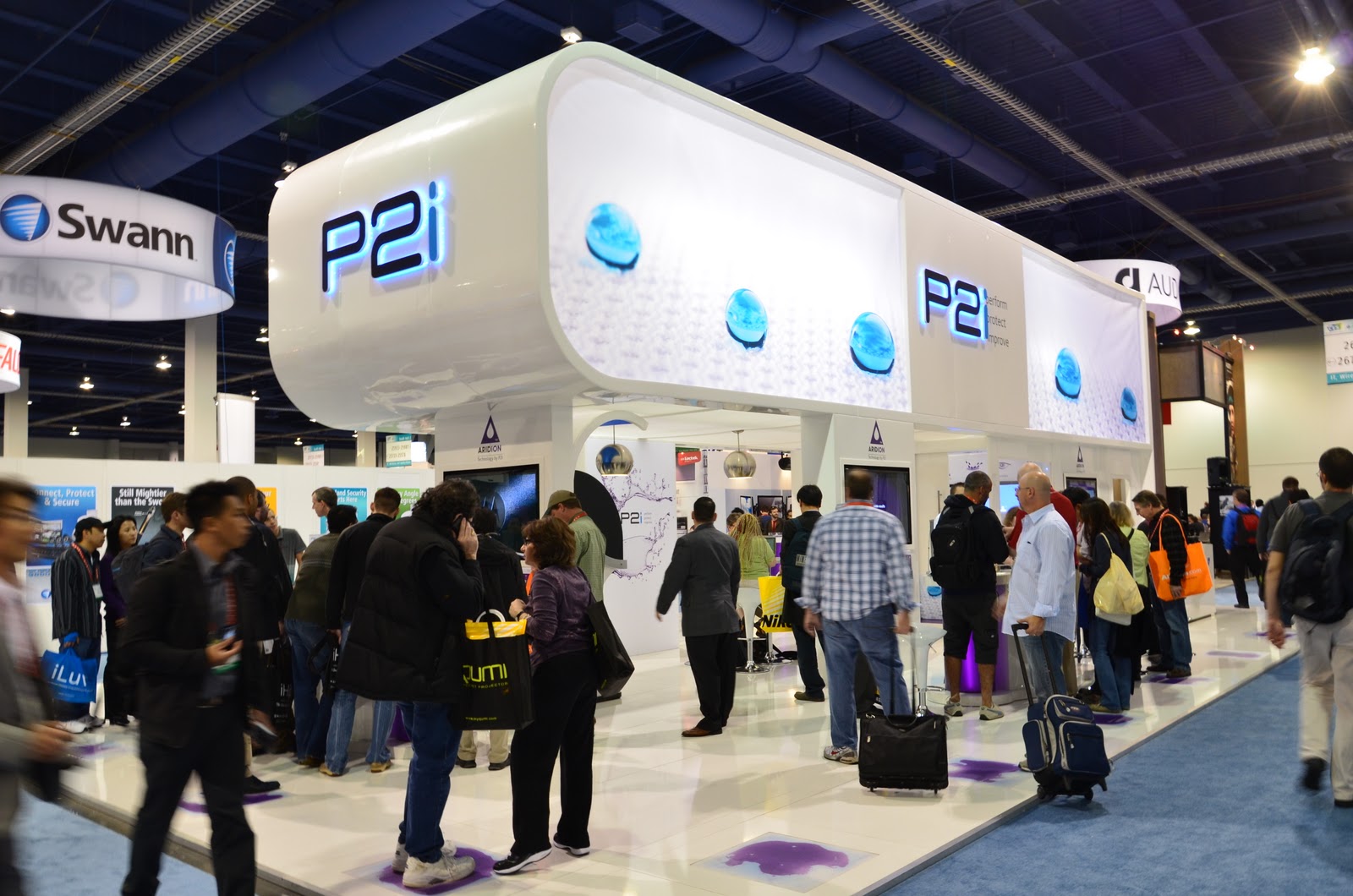

 |
| Images from our booth over the four days |
While the booth was busy with delegates, our technology was also picked up by a host of media and like last year, we receieved a great deal of press coverage from all kinds of sources including; PC World, Gadgetsteria, PC Advisor, Gagagadget, Nerd Reactor, Mobile Magazine, EBN News and Fox News to name but a few! There are also video features still to be posted from popular technology sites including Tech Bargins. These will be promoted on our Facebook, Twitter and YouTube accounts once live.
The combination of media coverage, a consistantly busy booth and Hannibal, our corporate magician entertaining the crowds, once again made CES a great success for us and validated our position as the world leaders in liquid repellent nano-coating technology for consumer electronics. We are now in further discussions with leading electronic brands about applying Aridion™ to a new range of consumer devices so watch this space.
You can see a collection of our images here as well as watching a short video we have put together showing some of the highlights from our booth:
You can find out more about Aridion™ by visiting: www.p2i.com/electronics and if you have any questions about how Aridion™ works do get in contact by commenting below.
P2i
P2i at CES 2012: Day two
on Wednesday, January 11, 2012
Day two at CES is almost over and it has been great with many delegates amazed by our technology and by our tissue demonstrations. Over the two days we have also received a lot of media coverage as well as interviews and below is a list of just some of the articles that have been posted:
Nerd Reactor: CES 2012 - Dropped your phone? P2i could have saved you
PC Adivsor: P2i's Aridion safeguards smartphones against water
Gagagadget: Toilet-proof your gadgets with P2i
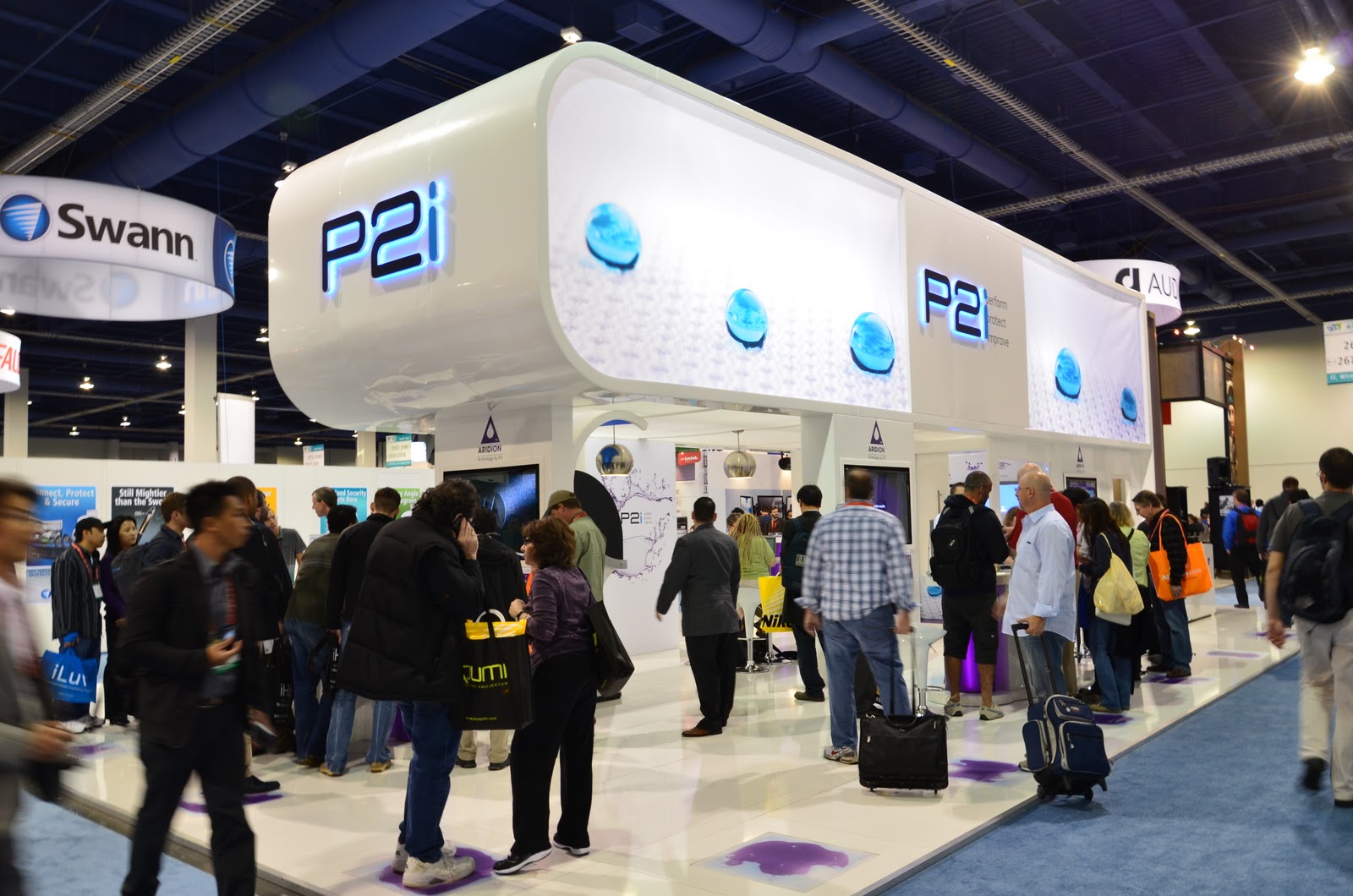
As you can see the coverage we are receiving is superb with many individuals and businesses interested in the opportunities that our technology presents. Throughout the day delegates have also been filming the demonstrations so we expect to see them up on YouTube very soon. We will post another update tomorrow but here are some more images from our booth:


www.p2i.com/aridion
Nerd Reactor: CES 2012 - Dropped your phone? P2i could have saved you
PC Adivsor: P2i's Aridion safeguards smartphones against water
Gagagadget: Toilet-proof your gadgets with P2i
As you can see the coverage we are receiving is superb with many individuals and businesses interested in the opportunities that our technology presents. Throughout the day delegates have also been filming the demonstrations so we expect to see them up on YouTube very soon. We will post another update tomorrow but here are some more images from our booth:


www.p2i.com/aridion
P2i at CES 2012: First day highlights
on Tuesday, January 10, 2012
It is over a year now since we first attended International CES in Las Vegas and we are now back to showcase our technology at the 2012 event. The show in 2011 was a great experiance for us and we gained a lot of coverage including Microsoft and Cool Tools, which you can read in post from last year.
This year our booth is even bigger and we have a host of meetings with leading electronic brands and manufacturers. Dr. Stephen Couslon CTO, demonstrates our liquid repellent technology from our booth:
CES 2012 runs from the 10th-13th of January and each day we will be uploading images and videos to our Twitter, Facebook and YouTube accounts as well as posting a daily blog live from our booth.
Here are some images from our booth on the first day of CES:
All our images will be uploaded to our Facebook and Flickr accounts next week but we will add more images in tomorrow's post.
Find out more about Aridion technology at: www.p2i.com/aridion
This year our booth is even bigger and we have a host of meetings with leading electronic brands and manufacturers. Dr. Stephen Couslon CTO, demonstrates our liquid repellent technology from our booth:
CES 2012 runs from the 10th-13th of January and each day we will be uploading images and videos to our Twitter, Facebook and YouTube accounts as well as posting a daily blog live from our booth.
Here are some images from our booth on the first day of CES:
 |
| Booth starts to gather a crowd |
 |
| Demonstrations |
 |
| Hannibal performs his magic |
Find out more about Aridion technology at: www.p2i.com/aridion
Returning from Filtration 2011
on Wednesday, November 30, 2011
Following on from our last post we have recently returned from Filtration 2011 (INDA) in Chicago where we were exhibited for the first time.
Having never attended a show of this type before we were excited to see how our nano-coating technology for filtration would be received over the two days (16-17th November).
According to the organizers this year's show saw significantly increased visitors and exhibitors compared to last year and we were delighted that a great many of them stopped at our booth (below).


Over the two days delegates were able to take part in hands-on demonstrations as well as ask questions about our technology and the benefits it offers to filter media across a range of platforms including; Air Compressors, Aviation and Diesel Fuel, Gas Turbines and Hard Disk Venting.
With INDA proving such a success we are looking forward to more Filtration shows in the new year.
You can see a collection of our images from the show on our Flickr page as well as watching our Filtration video below:
If you have any questions regarding our technology for filter media you can contact us here.
Having never attended a show of this type before we were excited to see how our nano-coating technology for filtration would be received over the two days (16-17th November).
According to the organizers this year's show saw significantly increased visitors and exhibitors compared to last year and we were delighted that a great many of them stopped at our booth (below).


Over the two days delegates were able to take part in hands-on demonstrations as well as ask questions about our technology and the benefits it offers to filter media across a range of platforms including; Air Compressors, Aviation and Diesel Fuel, Gas Turbines and Hard Disk Venting.
With INDA proving such a success we are looking forward to more Filtration shows in the new year.
You can see a collection of our images from the show on our Flickr page as well as watching our Filtration video below:
If you have any questions regarding our technology for filter media you can contact us here.
P2i at Filtration 2011
on Wednesday, November 16, 2011
So far this year we have attended seven major tradeshows that have focused on the electronics and lifestyle markets, but now our attention turns to a growing sector for us, Filtration.
Today and tomorrow, Filtration 2011 is taking place at the Navy Pier in Chicago and this is the first time we have had a booth at an event of this type.

The show which attracts leading people and businesses in the filtration industry, gather together over the two days to discuss the latest trends and technologies.
Our booth (1001) will be showcasing how our world leading nano-coating technology enhances existing filtration media with particular focus on:
- Air Compressors
- Aviation Fuel
- Diesel Fuel
- Gas Turbines
- Hard Disk Venting
Alongside demonstrations of the technology we have also produced an animation that highlights the benefits our technology offers to filters, which you can watch below:
Over the two days we will be posting images from our booth, you can follow us on Twitter to keep up to date. You can also find out more about our technology for filtration here.
Today and tomorrow, Filtration 2011 is taking place at the Navy Pier in Chicago and this is the first time we have had a booth at an event of this type.

The show which attracts leading people and businesses in the filtration industry, gather together over the two days to discuss the latest trends and technologies.
Our booth (1001) will be showcasing how our world leading nano-coating technology enhances existing filtration media with particular focus on:
- Air Compressors
- Aviation Fuel
- Diesel Fuel
- Gas Turbines
- Hard Disk Venting
Alongside demonstrations of the technology we have also produced an animation that highlights the benefits our technology offers to filters, which you can watch below:
Over the two days we will be posting images from our booth, you can follow us on Twitter to keep up to date. You can also find out more about our technology for filtration here.
Labels:
air compressor,
air flow,
airflow,
aviation fuel,
diesel fuel,
dirt,
filter media,
filters,
Filtration,
fuel,
gas turbine,
nano technology,
nano-coating,
nanotech,
oil,
P2i,
water
0
comments
The difference between water resistant and repellent technologies
on Friday, November 4, 2011
We recently came across the EMU Australia footwear brand who produce and sell a great range of sheepskin boots around the world but what caught our attention was the following banner on their website:

It is a great visual image that really states the fact that their boots are water resistant. Exploring the site further, EMU have also produced a video showcasing their water resistant sheepskin against a competing UGG boot. You can see the video below:
Before watching the video we initially thought that it was our technology, as the EMU video is similar to a version that we produced back in 2009 that focused on our ion-mask™ water repellent technology (see further down). In the EMU video, they demonstrate the difference between their water resistant sheepskin boot and that of a standard UGG boot. You can clearly see a distinction between the two as the water uptake is significantly reduced on EMU's water resistant sheepskin while the UGG boot completely absorbs the water leading to a stained, heavy and uncomfortable boot.
However, even though the water resistance does keep the EMU boot from absorbing the water, if you look closely you can clearly see that there is a layer of water that remains on the boot once it is pulled out, giving it a shiny but wet look. Over time, this could potentially damage the surface, resulting in the absorption of water and eventual staining. This is when we realized that it was not our technology and that ion-mask™ could be a great solution.
Why ion-mask™?
Earlier, we mentioned a video we produced back in 2009 which carried out the same test as EMU demonstrate above but showcases our liquid repellent nano-coating technology. Although the boots in our demo are made from suede and not sheepskin the principles are the same:
The ion-mask™ treated boot completely repels the water by ensuring the water beads up and rolls off the boot leaving no layer or residue, which can occur with water resistant boots. The untreated version absorbs the water the instant it is submerged. We have also carried out this test using sheepskin boots and you can see the result in the following image:
Again, the repellent benefits of ion-mask™ act as an invisible shield forcing the water to bead up and roll off while the untreated version is completed soaked. Adding ion-mask™ to sheepskin boots means total liquid repellency without any leftover layers or streaks that is visible with only a resistant protection in place. An ion-mask™ repellent coating ensures that they remain dry, lightweight and most importantly comfortable.
While EMU's water resistant sheepskin boots do offer protection they still allow water to remain on the boot which over time can lead to staining and absorption. With the addition of ion-mask™ this is no longer a problem and as it is applied on the nanoscale you don't even know it is there.
If you want to know more about ion-mask™ you can here.

It is a great visual image that really states the fact that their boots are water resistant. Exploring the site further, EMU have also produced a video showcasing their water resistant sheepskin against a competing UGG boot. You can see the video below:
Before watching the video we initially thought that it was our technology, as the EMU video is similar to a version that we produced back in 2009 that focused on our ion-mask™ water repellent technology (see further down). In the EMU video, they demonstrate the difference between their water resistant sheepskin boot and that of a standard UGG boot. You can clearly see a distinction between the two as the water uptake is significantly reduced on EMU's water resistant sheepskin while the UGG boot completely absorbs the water leading to a stained, heavy and uncomfortable boot.
However, even though the water resistance does keep the EMU boot from absorbing the water, if you look closely you can clearly see that there is a layer of water that remains on the boot once it is pulled out, giving it a shiny but wet look. Over time, this could potentially damage the surface, resulting in the absorption of water and eventual staining. This is when we realized that it was not our technology and that ion-mask™ could be a great solution.
Why ion-mask™?
Earlier, we mentioned a video we produced back in 2009 which carried out the same test as EMU demonstrate above but showcases our liquid repellent nano-coating technology. Although the boots in our demo are made from suede and not sheepskin the principles are the same:
The ion-mask™ treated boot completely repels the water by ensuring the water beads up and rolls off the boot leaving no layer or residue, which can occur with water resistant boots. The untreated version absorbs the water the instant it is submerged. We have also carried out this test using sheepskin boots and you can see the result in the following image:
 |
| ion-mask™ treated (Left) / Untreated (Right) |
While EMU's water resistant sheepskin boots do offer protection they still allow water to remain on the boot which over time can lead to staining and absorption. With the addition of ion-mask™ this is no longer a problem and as it is applied on the nanoscale you don't even know it is there.
If you want to know more about ion-mask™ you can here.
Aridion™ received loud and clear at EUHA 2011
on Wednesday, October 26, 2011
Just a short post this week as we have just returned from a very successful EUHA congress in Nuremberg, Germany where we showcased our Aridion™ technology for hearing aids to an audience of audiologists, manufacturers, journalists and bloggers.
Over the three days our booth received a lot of interest and we are very excited by the potential new business prospects that emerged. Visitors to our booth were able to see the technology first hand with live demonstrations as well as an interactive hologram and of course Hannibal our corporate magician.
We also had our Aridion™ 8 machine on the booth, specifically designed to treat hearing aid devices which you can see below:
You can see a collection of images from the show on our Flickr and Facebook pages.
Next up for us is INDA 2011, a filtration tradeshow taking place in Chicago from the 15th-17th November.
Over the three days our booth received a lot of interest and we are very excited by the potential new business prospects that emerged. Visitors to our booth were able to see the technology first hand with live demonstrations as well as an interactive hologram and of course Hannibal our corporate magician.
We also had our Aridion™ 8 machine on the booth, specifically designed to treat hearing aid devices which you can see below:
 |
| Aridion™ 8 Machine |
Next up for us is INDA 2011, a filtration tradeshow taking place in Chicago from the 15th-17th November.
Labels:
aridion,
audio,
audiologists,
audiology,
EUHA,
hearing,
hearing aid,
nano technology,
nano-coating,
nanotech,
nanotechnology,
P2i
0
comments
Aridion™ to take centre stage at EUHA 2011
on Wednesday, October 19, 2011
It is conference time again and today we are in Nuremberg, Germany where the 56th International Congress of Hearing Aid Acousticians (EUHA) is taking place from the 19th-21st October.
EUHA is Europe's largest hearing aid tradeshow and this will be the first time that we have had a significant presence here.

Over the coming days, from our booth (G-14) we will be showcasing our Aridion™ technology to specialists in the hearing aid and acoustic industries.
With Aridion™ now serving three of the world's largest hearing aid manufacturers and over 5.5 million devices treated we are hoping for a very successful show and will be tweeting live which you can following via our Twitter account.
If you would like to know more about Aridion™ you can here as well as watching the video below:
We will post an update next week following up on how the show went.
EUHA is Europe's largest hearing aid tradeshow and this will be the first time that we have had a significant presence here.

Over the coming days, from our booth (G-14) we will be showcasing our Aridion™ technology to specialists in the hearing aid and acoustic industries.
With Aridion™ now serving three of the world's largest hearing aid manufacturers and over 5.5 million devices treated we are hoping for a very successful show and will be tweeting live which you can following via our Twitter account.
If you would like to know more about Aridion™ you can here as well as watching the video below:
We will post an update next week following up on how the show went.
Best Use of Technology Award
on Wednesday, October 12, 2011
What a year we are having! Back in August we won the 'Most Innovative Company in Europe' award from the International Business Awards (Stevies) and we are delighted to announce that we have won another prestigious award.
On Tuesday the 4th October at the Fast Growth Business Awards (FGBA) in London, UK, we were delighted to win the 'Best Use of Technology' award.

On Tuesday the 4th October at the Fast Growth Business Awards (FGBA) in London, UK, we were delighted to win the 'Best Use of Technology' award.
In what was a competitive category we won the judging panel over with our 'huge scope and potential, turnover growth and strong profit margin' which you can read in more detail via the Winner's Archive.
What do the awards represent?
The awards are organized by Growing Business magazine which is the UK's leading magazine for entrepreneurs and cutting edge businesses. The event was attended by over 300 entrepreneurs, business journalists and industry leaders.
What won us the award?
To be in contention for the 'Best Use of Technology' award, we had to demonstrate growth and success, customer satisfaction as well as showcasing a link between the use of technology and growth, something we have achieved successfully with our Aridion™ and ion-mask™ technologies.
Peter Rankin, P2i's Operations Director who accepted the award on our behalf, reflects on what this recognition means to P2i and how our technology enables continued growth for the future:
This award now sits alongside our other achievements, which include:
- International Business of the Year 2011
- Business Hero Award for 'Borderless Business'
- ISPO BrandNew Sportwear Award
CEO, Carl Francis also reflected on how our growth has established a world leading company "This award recognizes the expertise and diversity of our liquid repellent nano-coating technology across a range of market sectors, from consumer electronics to footwear and accessories. The possibilities for nano-coating are endless as P2i continues to build on our cutting edge technology by moving into other functional nano-coatings."
You can see images from the event on our Flickr page as well as keeping up to date with everything P2i through our newsletter.
You can see images from the event on our Flickr page as well as keeping up to date with everything P2i through our newsletter.
Changing the Game: P2i presents at Nano4Sport
on Wednesday, September 28, 2011
 |
| Delwyn Evans |
My presentation entitled: Changing the Game: Using Water Repellent Nano-Technology for Sport Shoes; highlighted how our ion-mask™ technology for lifestyle products (footwear and textiles) can lead to improvements in performance, such as reduced water uptake and improved appearance.
P2i's success in applying the technology on a commercial scale to a range of 3D objects was a key point of the presentation and I demonstrated the technology first hand on a pair of KSwiss's California running shoes which are currently available on the market featuring ion-mask™. For the demonstration the right shoe had been treated with ion-mask™ while the left shoe remained uncoated. Water was then dropped on the front of each shoe with the treated shoe repelling the water while on the left; the material instantly absorbed any water that came into contact with it.
 |
| KSwiss California |
Overall, Nano4Sport proved an interesting event, offering an opportunity to showcase ion-mask™ technology to individuals and businesses in the industry as well as witnessing new and emerging technologies.
You can read more about the event here and if you would like to know more about how ion-mask™ works and the benefits it offers visit: www.p2i.com/ion-mask
Labels:
delywn evans,
ion mask,
ion-mask,
KSwiss,
liquid repellent,
nano technology,
nano-coating,
nano4sport,
nanotech,
Outdoor,
P2i
0
comments
What is the difference between waterproof and water repellent?
on Monday, September 19, 2011
There have been an increasing amount of articles emerging, explaining the difference between waterproof and water repellent, so we thought it was time to add to the discussion and look closer at the definitions and differences between the two, with particular focus on footwear.
What is the difference between waterproof and water repellent?
Firstly, how are both defined?
Let's look at what it means to be waterproof. Footwear that has a waterproof label or tag similar to the styles used for hiking and trail running, means they are impervious to water (or no liquid can pass through them). Which is great if you are caught out in the elements or passing through streams and you need to stay dry, but how does a shoe actually become waterproof and what are the restrictions to having this type of footwear?
For materials and products to be considered waterproof they need to meet specific criteria. This criteria includes the amount of water pressure (psi) they can withstand before leaking or an "mm/24 hours" rating which equals the amount of rainfall a fabric can withstand in a single day before water starts to leak through.
In footwear terms, to be considered waterproof they will most likely have a barrier or membrane built inside as well as fully sealed seams and stitching, designed to keep water out and ensure your feet stay dry. However, if water enters the shoe above the ankle collar or sweat builds up, then your feet still become wet with the water unable to get out.
Sealed seams and membranes may protect feet from becoming wet but as they are built within the internal structure of the shoe they do not offer the same waterproof protection to the outside material. This can result in the shoe becoming very wet and heavy, leading to reduced comfort for the wearer, particularly on long hikes or runs.
There are of course solutions to this, such as the choice of material used as well as treating the outer surface of the shoe with durable water repellents (DWR). DWRs are coatings applied at the factory stage to fabrics making them water repellent (not proof). This treatment alongside the membrane ensures that the shoe lives up to its waterproof claims. However, these treatments can affect the functionality of the material as well as losing their effectiveness over time and re-treatments are usually required in the form of further sprays. In addition, they are rarely applied to all the materials used in the construction of a shoe, resulting in water ingress points.
There is also the issue of breathability or how much air can penetrate the fabric whilst still allowing sweat vapor to evaporate. The video below demonstrates the effect a membrane can have on breathability:
As you can see, the fabric and membrane layer significantly restricts air flow, while the stand alone fabric has no restriction and lets the air flow freely. While only a demonstration, it highlights the hidden impact a membrane can have on comfort and temperature control.
To combat this there are breathable membranes available that allow moisture (sweat) to escape but these tend to be more expensive than their non-breathable alternatives and can still allow levels of moisture build up to occur during exercise.
So what about water repellent?
Misunderstanding of the term water repellent can lead to disappointment when testing out a product, as you can find your feet or other parts become wet. For example, if a fabric or product is classified as 'repellent' this means it will repel water but is not impervious to it, or put in another way, there is a level of water pressure it can withstand before leaks start to appear. This is not seen as a disadvantage as the materials used will readily allow air to pass through removing the hot microclimate next to the foot, providing comfort and restricting sweating and discomfort.
Similarly to waterproof products there are criteria that fabrics and textiles have to undergo in order to test their repellency and protection levels and thus be given an overall rating. The Bundesmann test is one way of measuring this.
The test simulates actual rain environments by pouring a continuous shower of water over the surface of fabrics at a height to simulate rain, while at the same time lightly abrading the reverse side. The abrading technique is designed to encourage the water to seep through the fabric whilst also simulating movements of the body when a garment is being worn. The amount of water that seeps through, in addition to the amount absorbed into the fabric is then measured and the fabric is given an efficiency rating based on performance. The higher the rating the more repellent the material is.
How does P2i's liquid repellent technology - ion-mask™ differ?
ion-mask™ is a liquid repellent technology, meaning that liquid can still penetrate materials which have a natural airflow. What makes ion-mask™ so unique compared to other repellent treatments such as DWRs is that it is applied to the fully constructed shoe (or product) resulting in complete protection without changing the look or feel. Meaning that functionality such as breathability is not impaired. Furthermore, ion-mask™ is also solvent-free resulting in minimal environmental impact.
 You can find out more about our liquid repellent technology in the video below and by visiting the ion-mask™ page.
What is the difference between waterproof and water repellent?
Firstly, how are both defined?
- Waterproof: Impervious to water
- Water Repellent: Fabrics that have received a finish or coating that is not easily penetrated by water (Source: Oxford English Dictionary)
Let's look at what it means to be waterproof. Footwear that has a waterproof label or tag similar to the styles used for hiking and trail running, means they are impervious to water (or no liquid can pass through them). Which is great if you are caught out in the elements or passing through streams and you need to stay dry, but how does a shoe actually become waterproof and what are the restrictions to having this type of footwear?
For materials and products to be considered waterproof they need to meet specific criteria. This criteria includes the amount of water pressure (psi) they can withstand before leaking or an "mm/24 hours" rating which equals the amount of rainfall a fabric can withstand in a single day before water starts to leak through.
In footwear terms, to be considered waterproof they will most likely have a barrier or membrane built inside as well as fully sealed seams and stitching, designed to keep water out and ensure your feet stay dry. However, if water enters the shoe above the ankle collar or sweat builds up, then your feet still become wet with the water unable to get out.
Sealed seams and membranes may protect feet from becoming wet but as they are built within the internal structure of the shoe they do not offer the same waterproof protection to the outside material. This can result in the shoe becoming very wet and heavy, leading to reduced comfort for the wearer, particularly on long hikes or runs.
There are of course solutions to this, such as the choice of material used as well as treating the outer surface of the shoe with durable water repellents (DWR). DWRs are coatings applied at the factory stage to fabrics making them water repellent (not proof). This treatment alongside the membrane ensures that the shoe lives up to its waterproof claims. However, these treatments can affect the functionality of the material as well as losing their effectiveness over time and re-treatments are usually required in the form of further sprays. In addition, they are rarely applied to all the materials used in the construction of a shoe, resulting in water ingress points.
There is also the issue of breathability or how much air can penetrate the fabric whilst still allowing sweat vapor to evaporate. The video below demonstrates the effect a membrane can have on breathability:
As you can see, the fabric and membrane layer significantly restricts air flow, while the stand alone fabric has no restriction and lets the air flow freely. While only a demonstration, it highlights the hidden impact a membrane can have on comfort and temperature control.
To combat this there are breathable membranes available that allow moisture (sweat) to escape but these tend to be more expensive than their non-breathable alternatives and can still allow levels of moisture build up to occur during exercise.
So what about water repellent?
Misunderstanding of the term water repellent can lead to disappointment when testing out a product, as you can find your feet or other parts become wet. For example, if a fabric or product is classified as 'repellent' this means it will repel water but is not impervious to it, or put in another way, there is a level of water pressure it can withstand before leaks start to appear. This is not seen as a disadvantage as the materials used will readily allow air to pass through removing the hot microclimate next to the foot, providing comfort and restricting sweating and discomfort.
Similarly to waterproof products there are criteria that fabrics and textiles have to undergo in order to test their repellency and protection levels and thus be given an overall rating. The Bundesmann test is one way of measuring this.
The test simulates actual rain environments by pouring a continuous shower of water over the surface of fabrics at a height to simulate rain, while at the same time lightly abrading the reverse side. The abrading technique is designed to encourage the water to seep through the fabric whilst also simulating movements of the body when a garment is being worn. The amount of water that seeps through, in addition to the amount absorbed into the fabric is then measured and the fabric is given an efficiency rating based on performance. The higher the rating the more repellent the material is.
How does P2i's liquid repellent technology - ion-mask™ differ?
ion-mask™ is a liquid repellent technology, meaning that liquid can still penetrate materials which have a natural airflow. What makes ion-mask™ so unique compared to other repellent treatments such as DWRs is that it is applied to the fully constructed shoe (or product) resulting in complete protection without changing the look or feel. Meaning that functionality such as breathability is not impaired. Furthermore, ion-mask™ is also solvent-free resulting in minimal environmental impact.

Subscribe to:
Posts (Atom)