Isaac Asimov was a great science fiction writer, but even the best has his off days, and Asimov’s low point was probably his involvement with the dire science fiction movie Fantastic Voyage. Asimov wasn’t responsible for the story, but provided the novelization – and he probably regretted it. The premise of the film was that miniaturization technology has made it possible shrink a submarine and its crew down to around 1,000 nanometres, sending it into a man’s bloodstream to find and destroy a blood clot on his brain.
Along the way the crew have various silly encounters with the body’s systems – but strip away the Hollywood shlock and underneath is an idea that has been developed in a lot more detail by IT pioneer and life extension enthusiast Ray Kurzweil. Based on the idea of miniature robotic devices – nanobots – Kurzweil believes that in the future we will not have a single manned Proteus submarine as featured in Fantastic Voyage in our bloodstreams but rather a whole host of nanobots that will undertake medical functions and keep humans of the future alive indefinitely.
As we have seen in The Importance of Being Wet, the chances are that any such devices would not be a simple miniaturization of existing mechanical robots with their flat metal surfaces and gears, but rather would be based on the wet technology of the natural nanoscale world.
Among the possibilities Kurzweil suggests are on the cards are self-propelling robotic replacements for blood cells (this eliminates the importance of the heart as a pump, and hence the risk of heart disease), built in monitors for any sign of the body drifting away from ideal operation, nanobots that can deliver drugs to control cancer or remove cancer cells, and even miniature robots that make direct repairs to genes.
Kurzweil also expects we might separate the pleasure of eating from getting the nutrients we need, leaving the latter to nanobots in the bloodstream that release the essentials when we need them, while other nano devices remove toxins from the blood and destroy unwanted food without it ever influencing our metabolism. You could pig out on anything you wanted, all day and every day, and never suffer the consequences. (Given Kurzweil is notorious for living on an unpleasant diet to attempt to extend his life until nanotechnology is available, perhaps this is wishful thinking.)
If we are to develop this kind of nanotechnology, there are two aspects of nature that we will need to use as guides. One is to listen to the bees. Bearing in mind just how small a medical nanobot would have to be, even with the best developments in electronics the chances are it would have to be relatively unintelligent – yet it would need to achieve quite complex tasks. Bees are an excellent natural model for a way to achieve this.
A colony of bees achieves remarkable things in the construction and maintenance of its hive – yet taken as individuals, bees have very little capacity for mental activity. The realization that transformed our understanding of bees is that they form a super-organism. In effect, a whole colony is a single organism, not a collection of individual bees. A bee is more like a cell in a typical animal than it is a whole creature. By having appropriate mechanisms for communicating between the component parts – in the case of bees, using everything from chemical scent markers to waggle dances – relatively incapable individuals can come together to make a greater whole.
It would be sensible to expect something similar from medical nanobots at work in a human body. Individually they could not be intelligent enough to carry out their functions properly – but collectively, if they can interact to form a super-organism, they could operate autonomously without an external control mechanism continuously providing them with orders.
A second model for these miniature medics is a piece of natural nanotechnology that we usually regard as a bad guy – the virus. Viruses are very small – typically between 20 and 400 nanometres in size – and they lack many of the essential components of a living entity. However they are able to reproduce and thrive by using a remarkably clever cheat. Lacking the physical space to carry all the components of a living cell, they take over an existing cell in their host and subvert its mechanism to do their reproduction for them.
The particular class of virus that may be particularly useful as a model for medical nanobots is the phage. These are amongst the weirdest looking natural structure – some have an uncanny resemblance of the Apollo Lunar module: they actually look as if they are the sort of nanotechnology we might construct.
The word ‘phage’ is short for bacteriophage – ‘bacteria eater’. These are viruses than instead of preying on human cells – or those of any other large scale animals – attack and destroy bacteria. Because there are so many bacteria out there (even the human body has ten times more bacteria than human cells on board), their predators are also immensely populous and diverse. Phages may not be common fare on David Attenborough’s nature programmes, but they play a major role in the overall biological life of the Earth.
Because phages attack bacteria, they can be beneficial to human life. Throughout human existence we have been plagued with bacterial infections. (Literally – bacteria, for example, cause bubonic plague.) It is only relatively recently that antibiotics have provided us with a miracle cure for bacterial attacks – but that miracle is weakening. Bacteria breed and evolve quickly. There are strains of bacteria that can resist most of the existing antibiotics. But phages have the potential to attack bacteria resistant to all antibiotics. For a long time phage therapy was restricted to the former Soviet Union, but interest is spreading in making use of phages in medical procedures.
The biggest problem with phages is getting them to the right place. But medical nanobots based on a phage’s ability to attack or modify particular cells, combined with a super-organism’s ability to act in a collective manner would have huge potential. Modified viruses are already used to insert genetic payloads into cells – but the nanotechnology of the future, inspired by the phage and the bee, could see something much closer to Kurzweil’s vision.
Moving away from the medical, and from individual nanoscale elements, in the next installment of Nature’s Nanotech we will see how natural nanotechnology plays a role in silk and how fibres based on a nanotechnology structure could make rockets obsolete for putting satellites into space.
Showing posts with label nanotech. Show all posts
Showing posts with label nanotech. Show all posts
Hanging with the Gecko - Nature's Nanotech (3)
on Thursday, September 13, 2012
 |
| Image from Wikipedia |
It might be reasonable to assume that the gecko’s gravity defying feats were down to sucker cups on its feet, a bit like a lizard version of a squid, but the reality is much more interesting. Take a look at a gecko’s toes and you’ll see a series of horizontal pads called setae. Seen close up they look like collections of hairs, but in fact they are the confusingly named ‘processes’ – very thin extensions of the tissue of toe which branch out into vast numbers of nanometer scale bristles.
These tiny projections add up to a huge surface area that is in contact with the wall or other surface the gecko decides to encounter. And that’s the secret of their glue-free adhesion. Because the gecko’s setae are ideally structured to make the most of the van der Waals force. This is a quantum effect resulting from interaction between molecules in the gecko’s foot and the surface.
We are used to atoms being attracted to each other by the electromagnetic force between different charged particles. So, for example, water molecules are attracted to each other by the hydrogen bonding we saw producing spherical water droplets in the previous feature. The relative positive charge on one of the hydrogen atoms is attracted to the relative negative charge on an oxygen. But the van der Waals force is a result of additional attraction after the usual forces that bond atoms together in molecules and hydrogen bonding have been accounted for.
Because of the strange quantum motion of electrons around the outside of an atom, the charge at any point undergoes small fluctuations – van der Waals forces arise when these fluctuations pair up with opposite fluctuations in a nearby atom. The result is a tiny attraction between each of the nanoscale protrusions on the foot and the nearby surface, which add up over the whole of the foot to provide enough force to keep the gecko in place.
Remarkably, if every single protrusion on a typical gecko’s foot was simultaneously in contact with a surface it could keep a heavy human in place – up to around 133 kg. In fact the biggest problem a gecko has is not staying on a surface, but getting its foot off. To make this possible its toes are jointed unusually and it seems to secrete a lubricating fluid that makes it easier to detach its otherwise dry but sticky pads.
Not surprisingly, there is a lot of interest in making use of gecko-style technology. After all, master this approach and you have a form of adhesion that is extremely powerful, yet doesn’t deteriorate with repeated attaching and detaching like a conventional adhesive. A number of universities have been researching the subject.
The first publication seems to have been from the University of Akron in Ohio, where a paper in 2007 described a gecko technology sticky tape with four times the sticking power of a gecko’s foot, meaning fully deployed gecko-sized pads could hold up around half a tonne. With these on its feet, a 40 kilogram golden retriever would have no problem walking up walls – the only difficulty would be managing to apply enough force to detach its paws as it walked. In the tape, the gecko’s setae are replaced by nanotubes of carbon fibre which are attached to a sheet of flexible polymer, acting as the tape.
The great thing about carbon nanotubes, which are effectively long, thin, flexible carbon crystals, is that they can be significantly narrower than the smallest protrusions from a gecko’s foot. A typical nanotube has a diameter of a single nanometer – pure nanotechnology – maximising the opportunity for van der Waals attraction. Within a year, other researchers at the University of Dayton (Ohio again!) were announcing a glue with ten times the sticking power of the gecko’s foot.
Such adhesives are available commercially on a small scale, offering the ability to stick under extreme temperature conditions and to surfaces that are wet or flexible that would defeat practically any conventional adhesive. We can expect to see a lot more gecko tapes (like the Geckskin product) and gecko glues in the future.
There have been other theories to explain the mechanism of the gecko’s foot, including a form of capillary attraction, but the best evidence at the moment is in favour of van der Waals forces. This seems to be borne out by the problem geckos have sticking to Teflon – PTFE has very low van der Waals attractiveness. To find out more about the gecko’s foot (and other technological inspirations from nature) I would recommend the aptly titled The Gecko’s Foot by Peter Forbes.
The action that keeps a gecko in place is a dry application of natural nanotechnology, but the more you look at the nanotech biological world, the more you realize it’s mostly a wet world. In the next feature in this series we’ll look at why conventional ‘dry’ engineering often won’t work on nanoscales and how we need to take a different look at the way we build our technology, bringing liquids into the mix.
----
You can also read this post on the Popular Science website.
Labels:
gecko,
nano,
nanotech,
nanotechnology,
nature nanotechnology,
P2i,
popular science
0
comments

An Introduction to Nature's Nanotech
on Tuesday, September 11, 2012
Did you know that aspects of nature are built on nanotechnology? Brain Clegg, popular science author has written a series of posts (seven in total) exploring the nanotechnology that exists in nature. The series which is sponsored by P2i begins with an introduction which you can read below.
When we think of nanotechnology, it’s easy to jump to the conclusion that we are dealing with the ultimate in artificial manufacturing, the diametric opposite of something that’s natural. Yet in practice, nature is built on nanotechnology. From the day-to-day workings of the components of every single biological cell to the subtle optics of a peacock feather, what we see is nanotechnology at work.
Not only are the very building blocks of nature nanoscale, but natural nanotechnology is a magnificent inspiration for ways to make use of the microscopic to change our lives and environment for the better. By studying how very small things work in the natural world we can invent remarkable new products – and this feature is the first in a series that will explore just how much we can learn and gain from nature’s nano tech.
As I described in The Nanotechnology Myth the term ‘nanotechnology’ originates from the prefix nano- which is simply a billionth. Nanotechnology makes use of objects on the scale of a few nanometres, where a nanometre is a millionth of a millimetre. For comparison, a human hair is around 50,000 nanometres across. Nanotechnology encompasses objects that vary in size from a large molecule to a virus. A bacterium, typically around 1,000 nanometres in size, is around the upper limit of nanoscale items.
A first essential is to understand that although nanotechnology, like chemistry, is involved in the interaction of very small components of matter, it is entirely different from a chemical reaction. Chemistry is about the way those components join together and break apart. Nanotechnology is primarily about their physics – how the components interact. If we think of the analogy of making a bicycle, the ‘chemistry’ of the bicycle is how the individual components bolt together, the ‘nanotechnology’ is how, for example, the gear interacts with the chain or pushing the pedals makes the bike go.
This distinction is necessary to get over the concern some people raise about nature and nanotechnology. A while ago, when I wrote my book on environmental truth and lies, Ecologic, I had a strange argument with a representative of the Soil Association, the UK’s primary organic body. In 2008 the Soil Association banned nanoparticles from their products. But it only banned man-made nanoparticles, claiming that natural ones, like soot, are fine ‘because life has evolved with these.’
This is a total misunderstanding of the science. If there are any issues with nanotechnology they are about the physics, not the chemistry of the substance – and there is no sensible physical distinction between a natural nanoparticle and an artificial one. In the case of the Soil Association, the reasoning was revealed when they admitted that they take ‘a principles-based regulatory approach, rather than a case-by-case approach based on scientific information.’ In other words their opposition was a knee-jerk one to words like ‘natural’ and ‘artificial’ rather than based on substance.
Of themselves, like anything else, nanoparticles and nanotechnology in general can be used for bad or for good. Whether natural or artificial they have benefits and disadvantages. A virus, for example, is a purely natural nanotechnology that can be devastatingly destructive to living things. And as we will see, there are plenty of artificial nanotechnologies that bring huge benefits.
In nature, nanotechnology is constructed from large molecules. A molecule is nothing more than a collection of atoms, bonded together to form a structure, which can be as simple as a sodium chloride molecule – one atom each of the elements sodium and chlorine – or as complex as the dual helix of DNA. We don’t always appreciate how significant individual molecules are.
I had a good example of this a few days ago when I helped judge a competition run by the University of the West of England for school teams producing science videos. The topic they were given was the human genome – and the result was a set of very varied videos, some showing a surprising amount of talent. At the awards event I was giving a quick talk to the participants, looking at the essentials of a good science video. I pointed out that they had used a lot of jargon without explaining it – a common enough fault even in mainstream TV science.
Just to highlight this, I picked out a term most of them had used, but none had explained – chromosomes. What, I asked them was a chromosome? They told me what it did, but didn’t know what it was, except that it was a chunk of DNA and each human had 46 of them in most of their cells. This is true, but misses the big point. A chromosome is simply a single molecule of DNA. Nothing more, nothing less. One molecule.
Admittedly a chromosome is a very large molecule. Human chromosome 1 is the biggest molecule we know of, with around 10 billion atoms. Makes salt look a bit feeble. But it is still a molecule. The basic components of the biological mechanisms of everything living, up to an including human beings are molecules. Chromosomes provide one example, effectively information storage molecules with genes as chunks of information strung along a strip of DNA. Then there are proteins, the workhorses of the body. There are neurotransmitters and enzymes, and a whole host of molecules that are the equivalent of gears to the body’s magnificent clockwork. These are the building blocks of natural nanotechnology.
So with a picture of what we’re dealing with we can set out to see nature’s nanotech in action and the first example, in the next feature in this series, will show how nanotechnology on the surface of a leaf has inspired both self-cleaning glass and water resistant trainers.
----
You can also read this article on the Popular Science website.
When we think of nanotechnology, it’s easy to jump to the conclusion that we are dealing with the ultimate in artificial manufacturing, the diametric opposite of something that’s natural. Yet in practice, nature is built on nanotechnology. From the day-to-day workings of the components of every single biological cell to the subtle optics of a peacock feather, what we see is nanotechnology at work.
Not only are the very building blocks of nature nanoscale, but natural nanotechnology is a magnificent inspiration for ways to make use of the microscopic to change our lives and environment for the better. By studying how very small things work in the natural world we can invent remarkable new products – and this feature is the first in a series that will explore just how much we can learn and gain from nature’s nano tech.
As I described in The Nanotechnology Myth the term ‘nanotechnology’ originates from the prefix nano- which is simply a billionth. Nanotechnology makes use of objects on the scale of a few nanometres, where a nanometre is a millionth of a millimetre. For comparison, a human hair is around 50,000 nanometres across. Nanotechnology encompasses objects that vary in size from a large molecule to a virus. A bacterium, typically around 1,000 nanometres in size, is around the upper limit of nanoscale items.
A first essential is to understand that although nanotechnology, like chemistry, is involved in the interaction of very small components of matter, it is entirely different from a chemical reaction. Chemistry is about the way those components join together and break apart. Nanotechnology is primarily about their physics – how the components interact. If we think of the analogy of making a bicycle, the ‘chemistry’ of the bicycle is how the individual components bolt together, the ‘nanotechnology’ is how, for example, the gear interacts with the chain or pushing the pedals makes the bike go.
This distinction is necessary to get over the concern some people raise about nature and nanotechnology. A while ago, when I wrote my book on environmental truth and lies, Ecologic, I had a strange argument with a representative of the Soil Association, the UK’s primary organic body. In 2008 the Soil Association banned nanoparticles from their products. But it only banned man-made nanoparticles, claiming that natural ones, like soot, are fine ‘because life has evolved with these.’
This is a total misunderstanding of the science. If there are any issues with nanotechnology they are about the physics, not the chemistry of the substance – and there is no sensible physical distinction between a natural nanoparticle and an artificial one. In the case of the Soil Association, the reasoning was revealed when they admitted that they take ‘a principles-based regulatory approach, rather than a case-by-case approach based on scientific information.’ In other words their opposition was a knee-jerk one to words like ‘natural’ and ‘artificial’ rather than based on substance.
Of themselves, like anything else, nanoparticles and nanotechnology in general can be used for bad or for good. Whether natural or artificial they have benefits and disadvantages. A virus, for example, is a purely natural nanotechnology that can be devastatingly destructive to living things. And as we will see, there are plenty of artificial nanotechnologies that bring huge benefits.
In nature, nanotechnology is constructed from large molecules. A molecule is nothing more than a collection of atoms, bonded together to form a structure, which can be as simple as a sodium chloride molecule – one atom each of the elements sodium and chlorine – or as complex as the dual helix of DNA. We don’t always appreciate how significant individual molecules are.
I had a good example of this a few days ago when I helped judge a competition run by the University of the West of England for school teams producing science videos. The topic they were given was the human genome – and the result was a set of very varied videos, some showing a surprising amount of talent. At the awards event I was giving a quick talk to the participants, looking at the essentials of a good science video. I pointed out that they had used a lot of jargon without explaining it – a common enough fault even in mainstream TV science.
Just to highlight this, I picked out a term most of them had used, but none had explained – chromosomes. What, I asked them was a chromosome? They told me what it did, but didn’t know what it was, except that it was a chunk of DNA and each human had 46 of them in most of their cells. This is true, but misses the big point. A chromosome is simply a single molecule of DNA. Nothing more, nothing less. One molecule.
Admittedly a chromosome is a very large molecule. Human chromosome 1 is the biggest molecule we know of, with around 10 billion atoms. Makes salt look a bit feeble. But it is still a molecule. The basic components of the biological mechanisms of everything living, up to an including human beings are molecules. Chromosomes provide one example, effectively information storage molecules with genes as chunks of information strung along a strip of DNA. Then there are proteins, the workhorses of the body. There are neurotransmitters and enzymes, and a whole host of molecules that are the equivalent of gears to the body’s magnificent clockwork. These are the building blocks of natural nanotechnology.
So with a picture of what we’re dealing with we can set out to see nature’s nanotech in action and the first example, in the next feature in this series, will show how nanotechnology on the surface of a leaf has inspired both self-cleaning glass and water resistant trainers.
----
You can also read this article on the Popular Science website.
A Brief History of Nanotechnology: Part 1 - Roots
on Tuesday, May 8, 2012
In this series we are going to take a closer look at the history of nanotechnology, from early findings through to the present day and what developments nanotechnology can bring for the future.
To begin we are going to explore the beginnings of nanotechnology.
Most people consider nanotechnology to be a modern field of science. Primary development occurred in the 1980s and 1990s, and it continues to evolve. Its history is usually traced as far back as Richard Feynman's famous 1959 lecture "There's Plenty of Room at the Bottom". Feynman did not specifically name nanotechnology, but his talk "inspired the conceptual beginnings of the field decades later”.
However, as a recent article in the Guardian suggests, the field may actually have roots that extend much further back - all the way into the ancient world. "Artisans from the past also controlled matter at the tiniest scales," writes the article's author, Rosamund Daw. "By modern-day standards, they were working in a branch of nanotechnology called nanocomposites. These are bulk materials in which nanoscale particles are mixed to improve the properties of the overall or composite material."
One example of this is the Lycurgus cup, a Roman glass cage cup containing nanoparticles that make the glass look red when light shines through it but green when viewed in reflected light. Another is Maya Blue, a bright azure pigment discovered in the Mayan city of Chichen Itz which is particularly resistant to wear and contains clay with nanopores into which indigo dye was combined chemically to create an environmentally-stable pigment. And in 2006 researchers in Germany revealed that they had discovered nanowires and carbon nanotubes in a Damascus steel sabre from the 17th century.
The artisans who crafted these objects and materials may not exactly have been nanotechnologists by modern standards, but it's impressive to see how far back the history of this modern technology can be traced. Moreover, the discoveries that today's scientists have made as a result of looking at these very old objects may actually help advance the field. "Some of these studies are providing pointers for new nanotechnology research," writes Daw. Based on a study of the properties of the Lycurgus cup, for example, "researchers have developed thin nanocomposite films containing gold nanoparicles which can reflect infra-red while still transmitting light. These films could be used to coat windows in hot countries to reflect heat away while allow light through the glass, thus reducing the need for air conditioning." So the history of nanotechnology is informing its future.
In our next post we will take a look at the early stages of nanotechnology development...
To begin we are going to explore the beginnings of nanotechnology.
Most people consider nanotechnology to be a modern field of science. Primary development occurred in the 1980s and 1990s, and it continues to evolve. Its history is usually traced as far back as Richard Feynman's famous 1959 lecture "There's Plenty of Room at the Bottom". Feynman did not specifically name nanotechnology, but his talk "inspired the conceptual beginnings of the field decades later”.
However, as a recent article in the Guardian suggests, the field may actually have roots that extend much further back - all the way into the ancient world. "Artisans from the past also controlled matter at the tiniest scales," writes the article's author, Rosamund Daw. "By modern-day standards, they were working in a branch of nanotechnology called nanocomposites. These are bulk materials in which nanoscale particles are mixed to improve the properties of the overall or composite material."
One example of this is the Lycurgus cup, a Roman glass cage cup containing nanoparticles that make the glass look red when light shines through it but green when viewed in reflected light. Another is Maya Blue, a bright azure pigment discovered in the Mayan city of Chichen Itz which is particularly resistant to wear and contains clay with nanopores into which indigo dye was combined chemically to create an environmentally-stable pigment. And in 2006 researchers in Germany revealed that they had discovered nanowires and carbon nanotubes in a Damascus steel sabre from the 17th century.
The artisans who crafted these objects and materials may not exactly have been nanotechnologists by modern standards, but it's impressive to see how far back the history of this modern technology can be traced. Moreover, the discoveries that today's scientists have made as a result of looking at these very old objects may actually help advance the field. "Some of these studies are providing pointers for new nanotechnology research," writes Daw. Based on a study of the properties of the Lycurgus cup, for example, "researchers have developed thin nanocomposite films containing gold nanoparicles which can reflect infra-red while still transmitting light. These films could be used to coat windows in hot countries to reflect heat away while allow light through the glass, thus reducing the need for air conditioning." So the history of nanotechnology is informing its future.
In our next post we will take a look at the early stages of nanotechnology development...
Returning to AudiologyNOW!
on Wednesday, March 28, 2012
About this time last year our booth was crowned the Best of Show at AudiologyNOW! 2011 and we are back exhibiting at this year's show which takes place in Boston from the 29th-31st March 2012.
Our fingers are crossed, hoping to win the Best of Show award again but our real aim at AudiologyNOW! 2012 is to promote and demonstrate our Aridion™ technology. Since the 2011 show, Aridion™ is now applied to approximately 60% of hearing aids worldwide, protecting them against water and corrosion damage which can occur where moisture, sweat and cerumen builds up.
These types of environments can all be found within and around the ear and are a significant factor in causing hearing aids to malfuction. Aridion™ signfincantly reduces the damage caused by liquid and moisture resulting in longer lasting devices and reduced return rates.
AudiologyNOW! is the world's largest gathering of audiologists and we are looking forward to once again showcasing how Aridion™ can revolutionize the performance of hearing aids for manufacturers and consumers.
Below are some images from last years show:
We will be tweeting from the show and you can follow us on Twitter here.
Our fingers are crossed, hoping to win the Best of Show award again but our real aim at AudiologyNOW! 2012 is to promote and demonstrate our Aridion™ technology. Since the 2011 show, Aridion™ is now applied to approximately 60% of hearing aids worldwide, protecting them against water and corrosion damage which can occur where moisture, sweat and cerumen builds up.
These types of environments can all be found within and around the ear and are a significant factor in causing hearing aids to malfuction. Aridion™ signfincantly reduces the damage caused by liquid and moisture resulting in longer lasting devices and reduced return rates.
AudiologyNOW! is the world's largest gathering of audiologists and we are looking forward to once again showcasing how Aridion™ can revolutionize the performance of hearing aids for manufacturers and consumers.
Below are some images from last years show:
 |
| CEO, Carl Francis and Natasha Verniquet with the Best of Show Award |
 |
| Capture of the P2i booth from the foyer |
Waterproof and water repellent electronics...
on Wednesday, March 21, 2012
On the back of the International CES and Mobile World Congress (MWC) tradeshows there has been an increased amount of discussion, and at times confusion on the difference between waterproof and water repellent electronics. In this post, we will shed more light and understanding on the subject, but before we begin, here is how each is defined:
How do electronics become waterproof?
The term waterproof is itself confusing as there are varying scales of 'waterproofness' that can be measured to determine how well electronics perform in and around water. This scale is known as the Ingress Protection Rating (IPX) and is based on a scale of 0-8 where 0 means it has no protection and 8 means it can handle continuous immersion in water. For example, an electronic device that has an IPX7 rating is protected against water submersion to a depth of 1m for no longer than 30mins. The level of water protection a device is capable of is usually highlighted by the manufacturer either on the device or in the manual.
For a smartphone to pass IPX6 and above, the devices physical appearance is normally compromized and this can be seen through the development of ruggedized handsets that feature protective rubber and plastic casings, as below:
Fast forward to today and what was clear from the coverage at CES and MWC is that there is a strong desire for devices to be able to withstand water or other liquids. But unlike the above, the devices that are now appearing and claiming to be waterproof are not basic phones but instead are the latest smartphones on the market. What's more, these devices do not appear to have a protective case at all.
How are these new devices waterproof?
Well the answer is quite simple, gaskets and O-rings. Before water can reach the valuable internal components where all our data is stored there are barriers in place in the forms of gaskets and O-rings. For quick reference a gasket is a mechanical seal which fills the space between two or more surfaces to prevent leaking while an O-ring is designed to be compressed between two parts creating a seal. While both these barriers stop water from penetrating inside the device they can still alter physical aspects of the device making them bulky as well as expensive to produce and purchase.
There is also another problem, these seals can be comprised by general use and over time the parts can move or be damaged should the device be dropped. If just one of these barriers were to break, water would then be able seep inside towards the circuit board and internal components, resulting in device failure and loss of data as the inside becomes exposed to water.
Why repellency over waterproof?
Firstly, we need to be clear what repellent means when talking about electronics and how it differs from waterproof. That is where Aridion™ comes in.
The key difference is that electronics treated with Aridion™ will still allow water to get inside. Does that mean the end of the devices life? Not necessarily, as Aridion™ molecularly bonds to both the inside and outside of the entire device ensuring that each and every exposed surface is coated. This means that any water that does come into contact will move away from the surface rather than sticking to the device and if water does get inside, the internal components are also treated, producing the same effect.
This type of protection allows the device to be created without having to compensate for a protective casing, gaskets or O-rings. What is important to remember however is that even though the water is repelled, the coating does not make the device waterproof as it is not designed to withstand submersion.
You can get a better idea of how the coating is applied and works in this video:
Aridion™ provides water protection by removing the buildup of corrosion. Corrosion occurs not just when a phone is submerged but in high humidity and moisture environments such as saunas, in the bathroom when having a shower or traveling through different temperatures. All these factors can lead to internal moisture buildup which over time can corrode the circuits. Aridion™ protects against this as it stops the water/moisture from sticking to and in between the components which would result in electrochemical migration. Electrochemical migration is the movement of metal ions between conductors and if this happens the device short circuits.
So what is the difference?
In the simplest terms, for a device to be waterproof it has to either be completely sealed and ruggedized (making them bulky) or alternatively it must have barriers in place which stops water from penetrating through. The disadvantage with that being these seals can break resulting in the device becoming susceptible to water and corrosion damage.
Water repellent does not mean waterproof but it does mean protection from splashes, spills, corrosion and water damage brought on by the scenarios mentioned earlier (humidty and moisture) as well as those 'caught out in the rain' moments we have all experianced.
If you would like to know more about Aridion™ technology and the benefits it offers you can here.
The following video which was filmed at MWC with our CTO Dr. Stephen Coulson visibly demonstrates the benefits that Aridion™ offers to electronics devices:
Aridion™ is applied during the manufacturing process and is already applied to over 9 million devices including the Motorola RAZR and XOOM 2.
- Waterproof: Impervious to water
- Water Repellent: Treated with a finish that is resistant but not impervious to penetration by water
How do electronics become waterproof?
The term waterproof is itself confusing as there are varying scales of 'waterproofness' that can be measured to determine how well electronics perform in and around water. This scale is known as the Ingress Protection Rating (IPX) and is based on a scale of 0-8 where 0 means it has no protection and 8 means it can handle continuous immersion in water. For example, an electronic device that has an IPX7 rating is protected against water submersion to a depth of 1m for no longer than 30mins. The level of water protection a device is capable of is usually highlighted by the manufacturer either on the device or in the manual.
For a smartphone to pass IPX6 and above, the devices physical appearance is normally compromized and this can be seen through the development of ruggedized handsets that feature protective rubber and plastic casings, as below:
 |
| Sonim XP3 waterproof phone |
How are these new devices waterproof?
Well the answer is quite simple, gaskets and O-rings. Before water can reach the valuable internal components where all our data is stored there are barriers in place in the forms of gaskets and O-rings. For quick reference a gasket is a mechanical seal which fills the space between two or more surfaces to prevent leaking while an O-ring is designed to be compressed between two parts creating a seal. While both these barriers stop water from penetrating inside the device they can still alter physical aspects of the device making them bulky as well as expensive to produce and purchase.
There is also another problem, these seals can be comprised by general use and over time the parts can move or be damaged should the device be dropped. If just one of these barriers were to break, water would then be able seep inside towards the circuit board and internal components, resulting in device failure and loss of data as the inside becomes exposed to water.
Why repellency over waterproof?
Firstly, we need to be clear what repellent means when talking about electronics and how it differs from waterproof. That is where Aridion™ comes in.
The key difference is that electronics treated with Aridion™ will still allow water to get inside. Does that mean the end of the devices life? Not necessarily, as Aridion™ molecularly bonds to both the inside and outside of the entire device ensuring that each and every exposed surface is coated. This means that any water that does come into contact will move away from the surface rather than sticking to the device and if water does get inside, the internal components are also treated, producing the same effect.
This type of protection allows the device to be created without having to compensate for a protective casing, gaskets or O-rings. What is important to remember however is that even though the water is repelled, the coating does not make the device waterproof as it is not designed to withstand submersion.
You can get a better idea of how the coating is applied and works in this video:
Aridion™ provides water protection by removing the buildup of corrosion. Corrosion occurs not just when a phone is submerged but in high humidity and moisture environments such as saunas, in the bathroom when having a shower or traveling through different temperatures. All these factors can lead to internal moisture buildup which over time can corrode the circuits. Aridion™ protects against this as it stops the water/moisture from sticking to and in between the components which would result in electrochemical migration. Electrochemical migration is the movement of metal ions between conductors and if this happens the device short circuits.
So what is the difference?
In the simplest terms, for a device to be waterproof it has to either be completely sealed and ruggedized (making them bulky) or alternatively it must have barriers in place which stops water from penetrating through. The disadvantage with that being these seals can break resulting in the device becoming susceptible to water and corrosion damage.
Water repellent does not mean waterproof but it does mean protection from splashes, spills, corrosion and water damage brought on by the scenarios mentioned earlier (humidty and moisture) as well as those 'caught out in the rain' moments we have all experianced.
If you would like to know more about Aridion™ technology and the benefits it offers you can here.
The following video which was filmed at MWC with our CTO Dr. Stephen Coulson visibly demonstrates the benefits that Aridion™ offers to electronics devices:
Aridion™ is applied during the manufacturing process and is already applied to over 9 million devices including the Motorola RAZR and XOOM 2.
Returning from Mobile World Congress 2012
on Monday, March 5, 2012
Having attended Mobile World Congress (MWC) for the first time last year we returned to Barcelona bigger and better.
With such a great show in 2011 we hoped that this year would bring similar results and we were not wrong, in fact the the buzz and coverage we recieved surpassed all our expectations.
Before MWC officially kicked off we attended ShowStoppers, a media only event that allowed us to demonstrate our Aridion™ technology to media and journalists from around the world as well as answering any questions they had. Over the course of the day we were interviewed by leading technology sites including Mashable and BBC Technology.
MWC which ran from the 27th February to the 1st March, the pattern continued as we carried out almost hourly interviews and demonstrations and you can see a collection of these interviews and videos by liking our Facebook page and clicking the links. We were also the topic of conversation for many podcast sites and you can listen to The Fonecast interview with our CTO, Dr. Stephen Coulson here and clicking on the Electronics tab.
In addition to this, MWC was also the venue to announce the winner of the Smart UK Project award. The Project was set up to find Britain's most innovative mobile company and despite not winning the award we were delighted to be a finalist from 79 initial company entries. You can watch the summary of the Smart UK Project awards here.
The show was a great success and you can see some of the images from our booth below:
If you have any questions about our Aridion technology and how it protects your electronics from water damage, you can email us at info@p2i.com.
Next up for us is AudiologyNOW! in Boston.
 |
| Our booth at MWC 2012 |
Before MWC officially kicked off we attended ShowStoppers, a media only event that allowed us to demonstrate our Aridion™ technology to media and journalists from around the world as well as answering any questions they had. Over the course of the day we were interviewed by leading technology sites including Mashable and BBC Technology.
MWC which ran from the 27th February to the 1st March, the pattern continued as we carried out almost hourly interviews and demonstrations and you can see a collection of these interviews and videos by liking our Facebook page and clicking the links. We were also the topic of conversation for many podcast sites and you can listen to The Fonecast interview with our CTO, Dr. Stephen Coulson here and clicking on the Electronics tab.
In addition to this, MWC was also the venue to announce the winner of the Smart UK Project award. The Project was set up to find Britain's most innovative mobile company and despite not winning the award we were delighted to be a finalist from 79 initial company entries. You can watch the summary of the Smart UK Project awards here.
The show was a great success and you can see some of the images from our booth below:
 |
| Hannibal our magician performs to the crowd |
 |
| The team |
Next up for us is AudiologyNOW! in Boston.
ion-mask™ heads to ISPO
on Thursday, January 26, 2012
After a very successful International CES our focus now turns to showcasing our ion-mask™ technology at the 2012 ISPO tradeshow in Munich, Germany.
ISPO which takes place from the 29th January - 1st February is considered the leading international sports business network with around 2,000 exhibitors and over 60,000 delegates from more than 100 countries.

Last July we attended a similar show; the EU OutDoor show in Friedrichshafen where we demonstrated the game changing benefits that ion-mask™ can offer to footwear, textiles and accessories and you can see how we got on in the video below:
ISPO which takes place from the 29th January - 1st February is considered the leading international sports business network with around 2,000 exhibitors and over 60,000 delegates from more than 100 countries.

Last July we attended a similar show; the EU OutDoor show in Friedrichshafen where we demonstrated the game changing benefits that ion-mask™ can offer to footwear, textiles and accessories and you can see how we got on in the video below:
Come and see the technology for yourself!
At ISPO 2012 we will be located in Hall B6, Booth 122 where we will again be highlighting our world leading ion-mask™ technology via videos and hands-on demonstrations of treated and untreated footwear, tissues and fabrics.
ion-mask™ has already been adopted by leading lifestyle brands including: Timberland, KSwiss, Hi-Tec, adidas, Van Dal, Scott, Teva, Fox gloves and Bollman Hats to name a few. Attending ISPO is an opportunity to further expand the range of products that ion-mask™ protects. You can see a collection of videos featuring ion-mask™ here.
Throughout the show we will be uploading images and posting comments live from the booth so do 'Like' us on Facebook and follow us on Twitter to be kept up to date.
See you there!
CES validates P2i as liquid repellent world leader
on Friday, January 20, 2012
In January last year we attended International CES in Las Vegas where we showcased Aridion™, our liquid repellent technology for consumer electronic devices and you can read how we got on here.
For 2012 we went back to CES with an even bigger booth and a major electronic manufacturer incorporating Aridion™ into their production process.
International CES, which took place from the 10th-13th January is the world's largest tradeshow for consumer electronics as well as a showcase for the latest technologies. The 2012 event was the largest in it's 44 year history with over 153,000 attendees and more than 3,100 exhibitors gathering to see the latest technological developments.
Throughout the four days our booth maintained a continous flow of delegates keen to see a demonstration of Aridion™ technology as well as discovering how it can protect electronic devices from liquid damage and corrosion. What was also great is that many delegates who visited us last year came back to our booth, this time bringing a crowd with them interested to see the technology first hand.


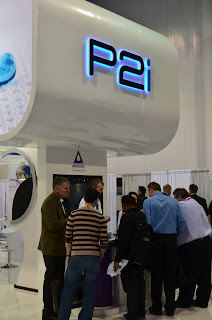
The combination of media coverage, a consistantly busy booth and Hannibal, our corporate magician entertaining the crowds, once again made CES a great success for us and validated our position as the world leaders in liquid repellent nano-coating technology for consumer electronics. We are now in further discussions with leading electronic brands about applying Aridion™ to a new range of consumer devices so watch this space.
You can see a collection of our images here as well as watching a short video we have put together showing some of the highlights from our booth:
P2i
For 2012 we went back to CES with an even bigger booth and a major electronic manufacturer incorporating Aridion™ into their production process.
International CES, which took place from the 10th-13th January is the world's largest tradeshow for consumer electronics as well as a showcase for the latest technologies. The 2012 event was the largest in it's 44 year history with over 153,000 attendees and more than 3,100 exhibitors gathering to see the latest technological developments.
Throughout the four days our booth maintained a continous flow of delegates keen to see a demonstration of Aridion™ technology as well as discovering how it can protect electronic devices from liquid damage and corrosion. What was also great is that many delegates who visited us last year came back to our booth, this time bringing a crowd with them interested to see the technology first hand.



 |
| Images from our booth over the four days |
While the booth was busy with delegates, our technology was also picked up by a host of media and like last year, we receieved a great deal of press coverage from all kinds of sources including; PC World, Gadgetsteria, PC Advisor, Gagagadget, Nerd Reactor, Mobile Magazine, EBN News and Fox News to name but a few! There are also video features still to be posted from popular technology sites including Tech Bargins. These will be promoted on our Facebook, Twitter and YouTube accounts once live.
The combination of media coverage, a consistantly busy booth and Hannibal, our corporate magician entertaining the crowds, once again made CES a great success for us and validated our position as the world leaders in liquid repellent nano-coating technology for consumer electronics. We are now in further discussions with leading electronic brands about applying Aridion™ to a new range of consumer devices so watch this space.
You can see a collection of our images here as well as watching a short video we have put together showing some of the highlights from our booth:
You can find out more about Aridion™ by visiting: www.p2i.com/electronics and if you have any questions about how Aridion™ works do get in contact by commenting below.
P2i
P2i at CES 2012: First day highlights
on Tuesday, January 10, 2012
It is over a year now since we first attended International CES in Las Vegas and we are now back to showcase our technology at the 2012 event. The show in 2011 was a great experiance for us and we gained a lot of coverage including Microsoft and Cool Tools, which you can read in post from last year.
This year our booth is even bigger and we have a host of meetings with leading electronic brands and manufacturers. Dr. Stephen Couslon CTO, demonstrates our liquid repellent technology from our booth:
CES 2012 runs from the 10th-13th of January and each day we will be uploading images and videos to our Twitter, Facebook and YouTube accounts as well as posting a daily blog live from our booth.
Here are some images from our booth on the first day of CES:
All our images will be uploaded to our Facebook and Flickr accounts next week but we will add more images in tomorrow's post.
Find out more about Aridion technology at: www.p2i.com/aridion
This year our booth is even bigger and we have a host of meetings with leading electronic brands and manufacturers. Dr. Stephen Couslon CTO, demonstrates our liquid repellent technology from our booth:
CES 2012 runs from the 10th-13th of January and each day we will be uploading images and videos to our Twitter, Facebook and YouTube accounts as well as posting a daily blog live from our booth.
Here are some images from our booth on the first day of CES:
 |
| Booth starts to gather a crowd |
 |
| Demonstrations |
 |
| Hannibal performs his magic |
Find out more about Aridion technology at: www.p2i.com/aridion
Returning from Filtration 2011
on Wednesday, November 30, 2011
Following on from our last post we have recently returned from Filtration 2011 (INDA) in Chicago where we were exhibited for the first time.
Having never attended a show of this type before we were excited to see how our nano-coating technology for filtration would be received over the two days (16-17th November).
According to the organizers this year's show saw significantly increased visitors and exhibitors compared to last year and we were delighted that a great many of them stopped at our booth (below).


Over the two days delegates were able to take part in hands-on demonstrations as well as ask questions about our technology and the benefits it offers to filter media across a range of platforms including; Air Compressors, Aviation and Diesel Fuel, Gas Turbines and Hard Disk Venting.
With INDA proving such a success we are looking forward to more Filtration shows in the new year.
You can see a collection of our images from the show on our Flickr page as well as watching our Filtration video below:
If you have any questions regarding our technology for filter media you can contact us here.
Having never attended a show of this type before we were excited to see how our nano-coating technology for filtration would be received over the two days (16-17th November).
According to the organizers this year's show saw significantly increased visitors and exhibitors compared to last year and we were delighted that a great many of them stopped at our booth (below).


Over the two days delegates were able to take part in hands-on demonstrations as well as ask questions about our technology and the benefits it offers to filter media across a range of platforms including; Air Compressors, Aviation and Diesel Fuel, Gas Turbines and Hard Disk Venting.
With INDA proving such a success we are looking forward to more Filtration shows in the new year.
You can see a collection of our images from the show on our Flickr page as well as watching our Filtration video below:
If you have any questions regarding our technology for filter media you can contact us here.
P2i at Filtration 2011
on Wednesday, November 16, 2011
So far this year we have attended seven major tradeshows that have focused on the electronics and lifestyle markets, but now our attention turns to a growing sector for us, Filtration.
Today and tomorrow, Filtration 2011 is taking place at the Navy Pier in Chicago and this is the first time we have had a booth at an event of this type.

The show which attracts leading people and businesses in the filtration industry, gather together over the two days to discuss the latest trends and technologies.
Our booth (1001) will be showcasing how our world leading nano-coating technology enhances existing filtration media with particular focus on:
- Air Compressors
- Aviation Fuel
- Diesel Fuel
- Gas Turbines
- Hard Disk Venting
Alongside demonstrations of the technology we have also produced an animation that highlights the benefits our technology offers to filters, which you can watch below:
Over the two days we will be posting images from our booth, you can follow us on Twitter to keep up to date. You can also find out more about our technology for filtration here.
Today and tomorrow, Filtration 2011 is taking place at the Navy Pier in Chicago and this is the first time we have had a booth at an event of this type.

The show which attracts leading people and businesses in the filtration industry, gather together over the two days to discuss the latest trends and technologies.
Our booth (1001) will be showcasing how our world leading nano-coating technology enhances existing filtration media with particular focus on:
- Air Compressors
- Aviation Fuel
- Diesel Fuel
- Gas Turbines
- Hard Disk Venting
Alongside demonstrations of the technology we have also produced an animation that highlights the benefits our technology offers to filters, which you can watch below:
Over the two days we will be posting images from our booth, you can follow us on Twitter to keep up to date. You can also find out more about our technology for filtration here.
Labels:
air compressor,
air flow,
airflow,
aviation fuel,
diesel fuel,
dirt,
filter media,
filters,
Filtration,
fuel,
gas turbine,
nano technology,
nano-coating,
nanotech,
oil,
P2i,
water
0
comments
Aridion™ received loud and clear at EUHA 2011
on Wednesday, October 26, 2011
Just a short post this week as we have just returned from a very successful EUHA congress in Nuremberg, Germany where we showcased our Aridion™ technology for hearing aids to an audience of audiologists, manufacturers, journalists and bloggers.
Over the three days our booth received a lot of interest and we are very excited by the potential new business prospects that emerged. Visitors to our booth were able to see the technology first hand with live demonstrations as well as an interactive hologram and of course Hannibal our corporate magician.
We also had our Aridion™ 8 machine on the booth, specifically designed to treat hearing aid devices which you can see below:
You can see a collection of images from the show on our Flickr and Facebook pages.
Next up for us is INDA 2011, a filtration tradeshow taking place in Chicago from the 15th-17th November.
Over the three days our booth received a lot of interest and we are very excited by the potential new business prospects that emerged. Visitors to our booth were able to see the technology first hand with live demonstrations as well as an interactive hologram and of course Hannibal our corporate magician.
We also had our Aridion™ 8 machine on the booth, specifically designed to treat hearing aid devices which you can see below:
 |
| Aridion™ 8 Machine |
Next up for us is INDA 2011, a filtration tradeshow taking place in Chicago from the 15th-17th November.
Labels:
aridion,
audio,
audiologists,
audiology,
EUHA,
hearing,
hearing aid,
nano technology,
nano-coating,
nanotech,
nanotechnology,
P2i
0
comments
Aridion™ to take centre stage at EUHA 2011
on Wednesday, October 19, 2011
It is conference time again and today we are in Nuremberg, Germany where the 56th International Congress of Hearing Aid Acousticians (EUHA) is taking place from the 19th-21st October.
EUHA is Europe's largest hearing aid tradeshow and this will be the first time that we have had a significant presence here.

Over the coming days, from our booth (G-14) we will be showcasing our Aridion™ technology to specialists in the hearing aid and acoustic industries.
With Aridion™ now serving three of the world's largest hearing aid manufacturers and over 5.5 million devices treated we are hoping for a very successful show and will be tweeting live which you can following via our Twitter account.
If you would like to know more about Aridion™ you can here as well as watching the video below:
We will post an update next week following up on how the show went.
EUHA is Europe's largest hearing aid tradeshow and this will be the first time that we have had a significant presence here.

Over the coming days, from our booth (G-14) we will be showcasing our Aridion™ technology to specialists in the hearing aid and acoustic industries.
With Aridion™ now serving three of the world's largest hearing aid manufacturers and over 5.5 million devices treated we are hoping for a very successful show and will be tweeting live which you can following via our Twitter account.
If you would like to know more about Aridion™ you can here as well as watching the video below:
We will post an update next week following up on how the show went.
Best Use of Technology Award
on Wednesday, October 12, 2011
What a year we are having! Back in August we won the 'Most Innovative Company in Europe' award from the International Business Awards (Stevies) and we are delighted to announce that we have won another prestigious award.
On Tuesday the 4th October at the Fast Growth Business Awards (FGBA) in London, UK, we were delighted to win the 'Best Use of Technology' award.

On Tuesday the 4th October at the Fast Growth Business Awards (FGBA) in London, UK, we were delighted to win the 'Best Use of Technology' award.
In what was a competitive category we won the judging panel over with our 'huge scope and potential, turnover growth and strong profit margin' which you can read in more detail via the Winner's Archive.
What do the awards represent?
The awards are organized by Growing Business magazine which is the UK's leading magazine for entrepreneurs and cutting edge businesses. The event was attended by over 300 entrepreneurs, business journalists and industry leaders.
What won us the award?
To be in contention for the 'Best Use of Technology' award, we had to demonstrate growth and success, customer satisfaction as well as showcasing a link between the use of technology and growth, something we have achieved successfully with our Aridion™ and ion-mask™ technologies.
Peter Rankin, P2i's Operations Director who accepted the award on our behalf, reflects on what this recognition means to P2i and how our technology enables continued growth for the future:
This award now sits alongside our other achievements, which include:
- International Business of the Year 2011
- Business Hero Award for 'Borderless Business'
- ISPO BrandNew Sportwear Award
CEO, Carl Francis also reflected on how our growth has established a world leading company "This award recognizes the expertise and diversity of our liquid repellent nano-coating technology across a range of market sectors, from consumer electronics to footwear and accessories. The possibilities for nano-coating are endless as P2i continues to build on our cutting edge technology by moving into other functional nano-coatings."
You can see images from the event on our Flickr page as well as keeping up to date with everything P2i through our newsletter.
You can see images from the event on our Flickr page as well as keeping up to date with everything P2i through our newsletter.
Changing the Game: P2i presents at Nano4Sport
on Wednesday, September 28, 2011
 |
| Delwyn Evans |
My presentation entitled: Changing the Game: Using Water Repellent Nano-Technology for Sport Shoes; highlighted how our ion-mask™ technology for lifestyle products (footwear and textiles) can lead to improvements in performance, such as reduced water uptake and improved appearance.
P2i's success in applying the technology on a commercial scale to a range of 3D objects was a key point of the presentation and I demonstrated the technology first hand on a pair of KSwiss's California running shoes which are currently available on the market featuring ion-mask™. For the demonstration the right shoe had been treated with ion-mask™ while the left shoe remained uncoated. Water was then dropped on the front of each shoe with the treated shoe repelling the water while on the left; the material instantly absorbed any water that came into contact with it.
 |
| KSwiss California |
Overall, Nano4Sport proved an interesting event, offering an opportunity to showcase ion-mask™ technology to individuals and businesses in the industry as well as witnessing new and emerging technologies.
You can read more about the event here and if you would like to know more about how ion-mask™ works and the benefits it offers visit: www.p2i.com/ion-mask
Labels:
delywn evans,
ion mask,
ion-mask,
KSwiss,
liquid repellent,
nano technology,
nano-coating,
nano4sport,
nanotech,
Outdoor,
P2i
0
comments
Hi-TecKnowledgy - V-Lite Infinity featuring ion-mask™
on Wednesday, September 7, 2011
Back in March we posted an article on the V-Lite Infinity Trail Running shoes featuring ion-mask™, which you can read here.
Since then the Infinity story has gone from strength to strength picking up a host of awards along the way including the Health Magazine Gear Award for the best trail running shoe (women's shoe) and the Best New Trail Shoe Award from Running Network. You can see Hi-Tec talking about the awards and the shoes at the Outdoor Retailer here.
However, the success did not stop there. The Liquid Mountaineering viral that promoted the Infinities has now surpassed 10 million views and was even featured in an episode on the hit Discovery Channel TV show, Mythbusters:
The campaign has also been used by The Times 100 as a case study example of 'Using promotion to position a brand' which you can read here.
With the Infinity range gather a strong momentum, Hi-Tec have now produced a series of videos, filmed at the 'Hook and Bullet' lounge. Already covering the Cascadia eVent HPi (also featuring ion-mask™) the latest video focuses on the V-Lite Hpi version of the Infinity range and looks at the 'sciencey' stuff in your shoes. You can be one of the first to view it below:
Do you own a pair of Infinity's? If so, we would love to hear how they and the ion-mask™ technology works for you. Also if you have not played the Infinity Run game yet, why not give it a go.... You can also find out more about the technology that makes the Infinity 'run on water' here?
Since then the Infinity story has gone from strength to strength picking up a host of awards along the way including the Health Magazine Gear Award for the best trail running shoe (women's shoe) and the Best New Trail Shoe Award from Running Network. You can see Hi-Tec talking about the awards and the shoes at the Outdoor Retailer here.
 |
| V-Lite Infinity HPi |
However, the success did not stop there. The Liquid Mountaineering viral that promoted the Infinities has now surpassed 10 million views and was even featured in an episode on the hit Discovery Channel TV show, Mythbusters:
The campaign has also been used by The Times 100 as a case study example of 'Using promotion to position a brand' which you can read here.
With the Infinity range gather a strong momentum, Hi-Tec have now produced a series of videos, filmed at the 'Hook and Bullet' lounge. Already covering the Cascadia eVent HPi (also featuring ion-mask™) the latest video focuses on the V-Lite Hpi version of the Infinity range and looks at the 'sciencey' stuff in your shoes. You can be one of the first to view it below:
Do you own a pair of Infinity's? If so, we would love to hear how they and the ion-mask™ technology works for you. Also if you have not played the Infinity Run game yet, why not give it a go.... You can also find out more about the technology that makes the Infinity 'run on water' here?
On the way to IFA 2011, Berlin
on Wednesday, August 31, 2011
We are in full tradeshow mode here. Having not long returned from EU OutDoor in Friedrichshafen where we promoted ion-mask™ we are now heading to Berlin from the 2nd-7th September for IFA 2011, to showcase Aridion™ technology.
IFA (Consumer Electronics Unlimited) is Europe's largest consumer electronics event, presenting the latest products and innovations from all the leading brands. This will be our first time exhibiting and we can't wait.

Like previous shows, visitors to our booth (Hall 9 Booth 304) will be able to see first-hand what our Aridion™ technology can do for electronics. Delegates can also take part in live demonstrations, interact with an Aridion™ specific holographic display as well as engage with Hannibal, our corporate magician.
It promises to be a very exciting show. You can find out more about IFA here as well as learning more about Aridion™ in our Electronics video below:
We look forward to seeing you there! Be sure to follow us on Twitter to see how we are getting on.
IFA (Consumer Electronics Unlimited) is Europe's largest consumer electronics event, presenting the latest products and innovations from all the leading brands. This will be our first time exhibiting and we can't wait.

Like previous shows, visitors to our booth (Hall 9 Booth 304) will be able to see first-hand what our Aridion™ technology can do for electronics. Delegates can also take part in live demonstrations, interact with an Aridion™ specific holographic display as well as engage with Hannibal, our corporate magician.
 |
| Hannibal |
We look forward to seeing you there! Be sure to follow us on Twitter to see how we are getting on.
Faces of Nano: P2i interviewed by TechSplurge
on Wednesday, August 24, 2011
Earlier this week our Principal Scientist, Delwyn Evans was interviewed by Julian Taub for this TechSplurge Blog as part of the Faces of Nano series. You can read the full interview below:
 FACES OF NANO: Dr. Delwyn Evans
Companies are an important part of the nanotech initiative. They take lab discoveries and apply them to consumers’ daily lives. One of the most successful nanotech companies, P2i, just won the title of Most Innovative Company in Europe. P2i manufactures technology that adds liquid repellent protection for both electronics and apparel (footwear). I interview Dr. Delwyn Evans, a chemist at P2i.
JT: Tell me about yourself, your background, and your position at P2i.
DE: I’m the Principal Chemist at P2i, and my responsibilities include the development and optimization of our nano-coating technology, representing the company at conferences and training our technical staff in the chemistry aspects of our process. Prior to P2i I worked for Abbott Laboratories as a Principal Scientist on blood glucose sensors and Cookson on residue-free solders. My degrees in Chemistry were obtained at the University of York, UK.
JT: How did you become interested in nanotechnology? How did you come to work at this company?
DE: Nanotechnology is interesting as it helps push technical boundaries set up by the limitations of incumbent technology, and when it’s commercialized, then it’s game-changing. P2i was particularly attractive as their technology can be applied to a wide range of industrial markets and so deliver serious commercial impact.
JT: How does the P2i technology work?
DE: On a general level, P2i’s process applies a nano-thin polymer coating to the surfaces of products. Depending on the customer’s requirements, a different polymer can be put onto their product so the surface can be made water repellent, oil repellent, water wetting or a range of other effects. Products are processed in a vacuum chamber and plasmas are used to activate the product surface and promote the growth of the polymer layer. As the process occurs in a vacuum, the monomer (polymer pre-cursor) can penetrate into the 3D structure of the product. At the end of the process, the chamber returns to atmospheric pressure and the treated items are removed and ready for use. It can have environmental benefits compared to traditional technologies as it only uses small quantities of monomer, and its solvent free.
JT: P2i was just named the most innovative company in Europe. What do you find to be the most innovative aspect of its technology?
DE: The adaptability of the core technology and work P2i has put in to take it from a university lab bench to a globalized industrial process. Many scientists are really surprised that the results from a PhD project can directly lead to a successful business.
JT: Where can I find P2i products?
DE: Consumers can currently find P2i-treated products on footwear and hearing aids. Many brands of shoes for sport or outdoor activities have taken up P2i’s water repellent treatment - ion-mask™. In the electronics sector, we have a technology called Aridion™, which prevents the ingress of water into devices. Over 4,500,000 hearings aids have now been processed with Aridion™. Hearing aids have their internal components protected against water ingress with our Aridion™ technology and so last longer in humid environments. We also treat bioconsumable products for lab use and filter membranes. As our technology develops further, we aim to bring a range of effects to a wider range of products.
JT: What do you see as the extent of P2i technology benefitting our daily lives?
DE: P2i technology makes great products even better. It can extend their lifetime, give them different functionality, and offer a wider choice of materials to product designers for their construction. And it can do all this with minimal amounts of chemicals, which gives it a low environmental footprint.
JT: Lastly, as someone on the cutting edge of science and technology, where do you see nanotechnology in five years?
DE: Nanotechnology will have its greatest effect in improving existing technologies and enabling new scientific areas. I expect its impact to be more subtle and gradual to end consumers, but felt more significantly in technical industries. It sounds like an oxymoron, but nano is only going to get bigger!
(Interviewed on the 15th August, 2011 - The TechSplurge blog can be read here)
Companies are an important part of the nanotech initiative. They take lab discoveries and apply them to consumers’ daily lives. One of the most successful nanotech companies, P2i, just won the title of Most Innovative Company in Europe. P2i manufactures technology that adds liquid repellent protection for both electronics and apparel (footwear). I interview Dr. Delwyn Evans, a chemist at P2i.
JT: Tell me about yourself, your background, and your position at P2i.
DE: I’m the Principal Chemist at P2i, and my responsibilities include the development and optimization of our nano-coating technology, representing the company at conferences and training our technical staff in the chemistry aspects of our process. Prior to P2i I worked for Abbott Laboratories as a Principal Scientist on blood glucose sensors and Cookson on residue-free solders. My degrees in Chemistry were obtained at the University of York, UK.
JT: How did you become interested in nanotechnology? How did you come to work at this company?
DE: Nanotechnology is interesting as it helps push technical boundaries set up by the limitations of incumbent technology, and when it’s commercialized, then it’s game-changing. P2i was particularly attractive as their technology can be applied to a wide range of industrial markets and so deliver serious commercial impact.
JT: How does the P2i technology work?
DE: On a general level, P2i’s process applies a nano-thin polymer coating to the surfaces of products. Depending on the customer’s requirements, a different polymer can be put onto their product so the surface can be made water repellent, oil repellent, water wetting or a range of other effects. Products are processed in a vacuum chamber and plasmas are used to activate the product surface and promote the growth of the polymer layer. As the process occurs in a vacuum, the monomer (polymer pre-cursor) can penetrate into the 3D structure of the product. At the end of the process, the chamber returns to atmospheric pressure and the treated items are removed and ready for use. It can have environmental benefits compared to traditional technologies as it only uses small quantities of monomer, and its solvent free.
JT: P2i was just named the most innovative company in Europe. What do you find to be the most innovative aspect of its technology?
DE: The adaptability of the core technology and work P2i has put in to take it from a university lab bench to a globalized industrial process. Many scientists are really surprised that the results from a PhD project can directly lead to a successful business.
JT: Where can I find P2i products?
DE: Consumers can currently find P2i-treated products on footwear and hearing aids. Many brands of shoes for sport or outdoor activities have taken up P2i’s water repellent treatment - ion-mask™. In the electronics sector, we have a technology called Aridion™, which prevents the ingress of water into devices. Over 4,500,000 hearings aids have now been processed with Aridion™. Hearing aids have their internal components protected against water ingress with our Aridion™ technology and so last longer in humid environments. We also treat bioconsumable products for lab use and filter membranes. As our technology develops further, we aim to bring a range of effects to a wider range of products.
JT: What do you see as the extent of P2i technology benefitting our daily lives?
DE: P2i technology makes great products even better. It can extend their lifetime, give them different functionality, and offer a wider choice of materials to product designers for their construction. And it can do all this with minimal amounts of chemicals, which gives it a low environmental footprint.
JT: Lastly, as someone on the cutting edge of science and technology, where do you see nanotechnology in five years?
DE: Nanotechnology will have its greatest effect in improving existing technologies and enabling new scientific areas. I expect its impact to be more subtle and gradual to end consumers, but felt more significantly in technical industries. It sounds like an oxymoron, but nano is only going to get bigger!
(Interviewed on the 15th August, 2011 - The TechSplurge blog can be read here)
Splash the P2i Duck
on Friday, August 12, 2011
In a previous post we talked about the launch of the Splash Challenge competition at the OutDoor show in Friedrichshafen. The competition was open to all delegates and those that visited our booth where able to take part in the competition by adopting Splash the P2i Duck, and taking him on adventures around the world.
Many Splashes were picked up by attendees at our booth and we are now receiving a steady stream of Splash images from all over the world, below are just a few:
As you can see there have been some great images sent in and with the competition running until the end of September we expect to receive many more.
In addition to this we have put a short video together of Splash at the OutDoor show and some of the entries we have received thus far:
If you would like to keep up with Splash or have any images still to send in, you can upload them here www.p2i.com/splash and why not follow him on Twitter.
We will send another update on how Splash is getting on next month...
 |
| Splash |
 |
| Collection of Splashes at our booth |
 |
| Splash entering another duck's territory in Wales |
 |
| Splash taking in the sights at the Snaefellsjökull volcano, Iceland |
 |
| Splash the risk taker in Oxfordshire, England |
In addition to this we have put a short video together of Splash at the OutDoor show and some of the entries we have received thus far:
If you would like to keep up with Splash or have any images still to send in, you can upload them here www.p2i.com/splash and why not follow him on Twitter.
We will send another update on how Splash is getting on next month...
Subscribe to:
Posts (Atom)